
Last updated: July 10, 2026
Night shift sleep can be improved by creating a consistent sleep routine, blocking daytime light, keeping your bedroom cool and quiet, and managing caffeine timing. Most night shift workers should aim for 7–9 hours of total sleep within a 24-hour period, even if that sleep happens during the day.
Key Takeaways
- Fight Your Body Clock: Night shift work forces you to sleep when your internal clock (circadian rhythm) is screaming “wake up.” The key is to send it powerful signals that it’s nighttime.
- Create a “Sleep Cave”: Your number one priority is making your bedroom as dark, cool, and quiet as possible. This is non-negotiable for quality day sleep.
- Light is Your Enemy (and Friend): Avoid bright light, especially blue light from screens and the sun, for at least two hours before you plan to sleep. Conversely, get sunlight exposure when you need to be awake.
- Timing is Everything: When you eat, drink caffeine, and even when you hydrate can dramatically impact your ability to fall and stay asleep.
- Consistency Wins: Try to keep a similar sleep-wake schedule, even on your days off. This helps stabilize your body clock and makes the transition back to work easier.
- Don’t Rely on Pills: While some supplements can help, they are not a substitute for good sleep hygiene. Focus on building a solid routine first.
Finishing a night shift can feel like landing in a different time zone. You’re exhausted, but the bright morning sun and the sounds of a world waking up tell your brain it’s time to be active. This conflict is why getting quality sleep after a night shift is so challenging. In fact, a 2025 study found that workers on a five-day night shift schedule slept about 70 minutes less per day than their day-shift counterparts [1]. That’s nearly six hours of lost sleep a week.
But it doesn’t have to be this way. With the right strategies, you can sleep better after a night shift and get the restorative rest you need to stay healthy, safe, and sane. This guide breaks down 17 science-backed methods that actually work.
Why Is It So Difficult to Sleep Better After a Night Shift?
The core problem is a battle between your work schedule and your body’s internal 24-hour clock, known as the circadian rhythm. This internal clock is controlled by a part of your brain called the suprachiasmatic nucleus (SCN), which responds primarily to light.
When sunlight hits your eyes in the morning, the SCN tells your body to stop producing melatonin (the sleep hormone) and start producing cortisol (the wake-up hormone). For night shift workers, this natural process happens at the exact moment you’re trying to go to sleep. You’re essentially fighting millions of years of evolution, which makes falling and staying asleep during the day incredibly difficult.
Master Your Environment: The “Sleep Cave” Method
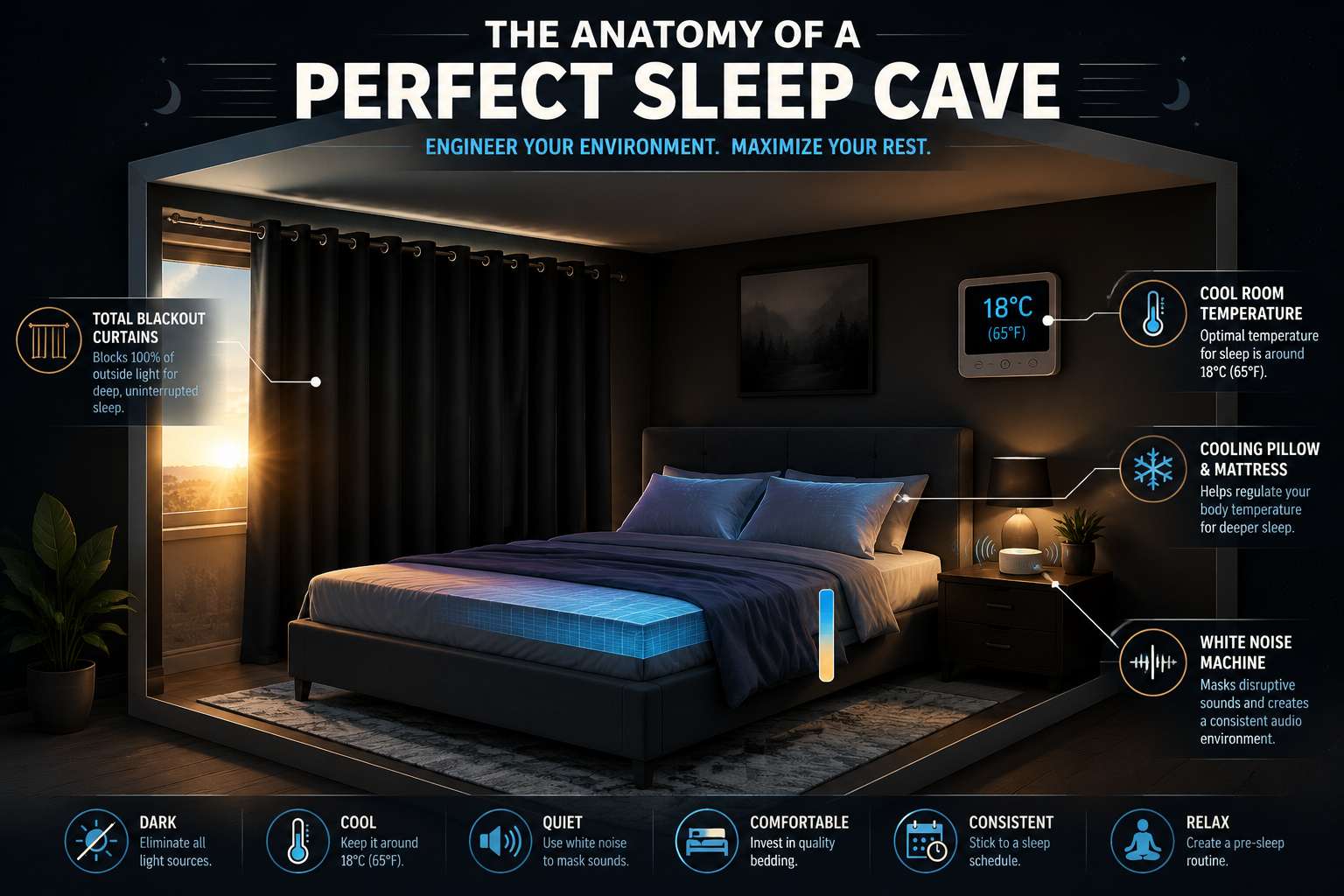
Because your body clock is so sensitive to light and other environmental cues, your first step is to create a sleep sanctuary that mimics nighttime.
1. Make Your Bedroom Pitch Black
Even a small amount of light can disrupt melatonin production. Your goal is total darkness.
- Invest in Blackout Curtains: This is the single most important investment for a shift worker. High-quality blackout curtains can block 99% of outside light. Choose a pair that wraps around the sides of the window for maximum coverage.
- Cover Electronics: Use black electrical tape to cover the tiny LED lights on your TV, power strips, and smoke detectors.
- Wear a Sleep Mask: For an extra layer of protection, a comfortable, contoured sleep mask ensures no light reaches your eyes, even if you shift positions.
2. Keep It Cool
Your body temperature naturally drops to initiate sleep. You can help this process along by keeping your bedroom cool. Most sleep experts recommend a temperature between 60-67°F (15-19°C).
- Cooling Pillows and Mattresses: If you tend to sleep hot, consider investing in cooling sleep products. Mattresses with gel-infused foam or breathable materials can help dissipate body heat.
3. Drown Out the Noise
The world is loud during the day, traffic, lawnmowers, deliveries, and family members can all ruin your sleep.
- Use a White Noise Machine: A white noise machine creates a consistent, soothing sound that masks jarring noises. You can also use a fan or a smartphone app.
- Try Earplugs: For ultimate quiet, a pair of comfortable foam or silicone earplugs can be a game-changer.
Strategic Timing: When You Eat, Drink, and Unwind Matters
Controlling your environment is half the battle. The other half is managing what you do in the hours leading up to your daytime sleep.
4. Manage Blue Light Exposure
Blue light is the most powerful signal to your brain to stay awake.
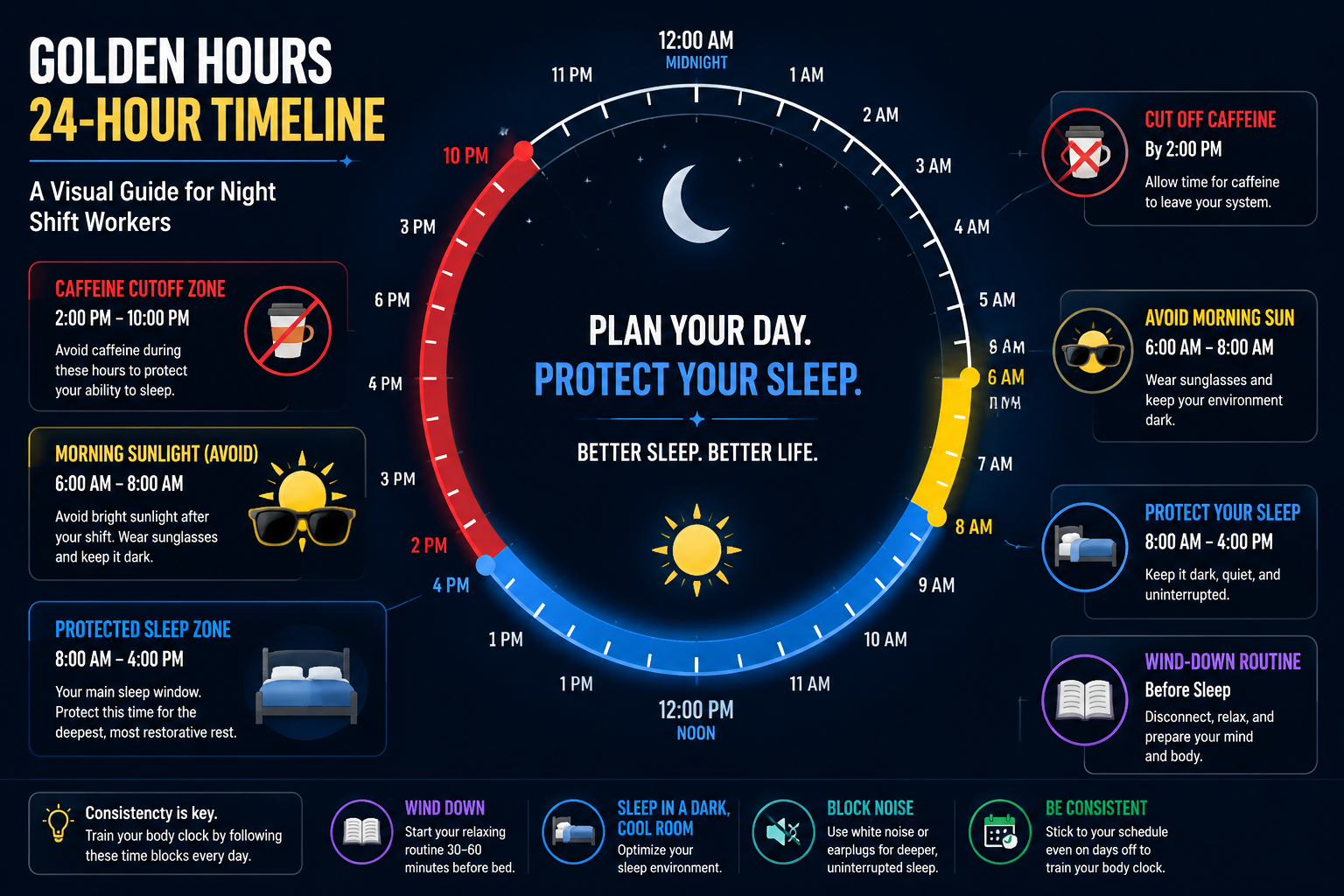
- Wear Blue-Light-Blocking Glasses: Put on a pair of amber-tinted glasses for your commute home. This blocks the blue light from the morning sun, streetlights, and your car’s dashboard, tricking your brain into thinking it’s getting dark.
- Dim Your Screens: If you must use your phone or watch TV before bed, use “night mode” settings and turn the brightness all the way down.
5. Time Your Caffeine Correctly
Caffeine can be a lifesaver during a long shift, but it can also sabotage your sleep. It has a half-life of about 5-6 hours, meaning it takes that long for your body to eliminate just half of it.
- Establish a Caffeine Curfew: Avoid all caffeine (including coffee, tea, soda, and energy drinks) for at least 8 hours before you plan to go to sleep. Drink it early in your shift, not halfway through.
6. Eat a “Breakfast” Dinner
A large, heavy meal right before bed can cause indigestion and disrupt sleep.
- Have a Light Snack: Eat your main meal before or early in your shift. Before you go to sleep, have a small, balanced snack containing both complex carbohydrates and protein, like a small bowl of oatmeal with nuts or a piece of whole-wheat toast with avocado.
- Avoid Sugar and Greasy Foods: Sugary or fatty foods can spike your blood sugar and interfere with sleep quality.
7. Hydrate Smartly
It’s crucial to stay hydrated, but waking up to use the bathroom is a common sleep disruptor.
- Taper Your Fluid Intake: Drink plenty of water throughout your shift, but reduce your intake in the last 2-3 hours before you plan to sleep.
Quick Comparison: Top Sleep Aids for Night Shift
| Sleep Aid | Primary Use | Cost | Best For |
|---|---|---|---|
| Blackout Curtains | Blocking Light | $$ – $$$ | Home bedrooms; non-negotiable first step. |
| Sleep Mask | Blocking Light | $ | Travel, naps, or adding extra darkness at home. |
| White Noise Machine | Blocking Noise | $$ | Noisy environments (traffic, family, pets). |
| Magnesium Glycinate | Relaxation | $ | Reducing stress and muscle tension before sleep. |
Supplements and Aids: What Really Works for Night Shift Sleep?
Supplements can be helpful, but they should complement your routine, not replace it. Always talk to your doctor before starting any new supplement.
8. Melatonin: Use With Caution
Melatonin is a hormone your body produces naturally to regulate sleep. Taking it as a supplement can help adjust your body clock.
- Pros: Can help you fall asleep faster when taken at the right time.
- Cons: Timing is critical. Taking it at the wrong time can throw your circadian rhythm further off-balance. It can also cause grogginess if the dose is too high.
- How to Use: Take a very low dose (0.5 to 3 mg) about 30-60 minutes before your desired bedtime.
9. Magnesium for Relaxation
Magnesium is a mineral that plays a role in relaxation and sleep. It can help calm the nervous system and may reduce nighttime leg cramps.
- Which Type to Choose: Look for Magnesium Glycinate or Magnesium L-Threonate, as these forms are easily absorbed and less likely to cause digestive issues than other forms like magnesium oxide.
10. The Power of a Good Sleep Mask
We mentioned it before, but it’s worth repeating. A comfortable, light-blocking sleep mask is one of the cheapest and most effective tools in a shift worker’s arsenal. Look for one that is contoured to avoid putting pressure on your eyes.
Lifestyle Adjustments for Long-Term Success
Your habits on your days off and the routines you build around sleep are just as important as what you do right after a shift.
11. Create a “Wind-Down” Ritual
You can’t go from 100 mph to a dead stop. You need a buffer zone to transition from work mode to sleep mode. This ritual signals to your body that sleep is coming.
- Duration: 30-60 minutes.
- Activities: Take a warm shower (the subsequent drop in body temperature promotes sleep), read a physical book (no screens!), listen to calm music or a podcast, or do some light stretching.
12. Take a Strategic Nap
A short nap before your shift can improve alertness and performance.
- The “Prophylactic” Nap: Take a 90-minute nap before you go to work. This completes a full sleep cycle and can help you feel refreshed without the grogginess of a shorter nap.
- The “Emergency” Nap: If you feel drowsy during your shift, a short 20-30 minute nap during a break can provide a quick boost.
13. Keep a Consistent(ish) Weekend Schedule
This is the hardest part, but it’s crucial for minimizing “social jetlag.”
- Anchor Sleep: On your days off, try not to shift your sleep schedule by more than 2-3 hours. For example, if you normally sleep from 9 AM to 5 PM, try to sleep from at least 4 AM to noon on your off days. This keeps your body clock from having to make a drastic adjustment every time you go back to work.
14. Get Sunlight at the Right Time
Use light strategically to anchor your circadian rhythm.
- On Work Days: Wear sunglasses on the way home, but when you wake up in the evening, try to get some exposure to bright light to signal “morning” to your brain.
- On Off Days: Get bright sunlight as soon as you wake up to reinforce a “normal” day-wake schedule.
Common Mistakes That Ruin Your Day Sleep
15. Having “One Drink” to Unwind
Alcohol might make you feel drowsy initially, but it severely disrupts sleep quality in the second half of the night, leading to frequent awakenings.
16. Scrolling on Your Phone in Bed
The blue light from your phone is a direct signal to your brain to wake up. The engaging content also stimulates your mind, making it harder to switch off. Make the bedroom a screen-free zone.
17. Exercising Too Close to Bedtime
Vigorous exercise raises your core body temperature and heart rate, which is the opposite of what you want before sleep. If you want to exercise after your shift, do it as soon as you get home, and keep it light (like stretching or yoga). Save intense workouts for after you wake up.
Conclusion
Thriving as a night shift worker isn’t about finding a single magic bullet; it’s about building a robust system of habits that protect your sleep. Start by turning your bedroom into a dark, cool, quiet sleep cave. Then, master the timing of your light exposure, caffeine intake, and meals.
Don’t try to change everything at once. Pick two or three strategies from this list, like getting blackout curtains and setting a caffeine curfew, and implement them this week. Once they become habit, add a few more. By taking control of your environment and routines, you can conquer the challenge of the night shift and get the deep, restorative sleep your body and mind deserve.
Frequently Asked Questions (FAQ)
How many hours of sleep do night shift workers need?
Night shift workers need the same amount of sleep as everyone else: 7-9 hours per 24-hour period. Because daytime sleep is often lower quality, it’s crucial to create an optimal environment to get as close to this target as possible.
Is it better to sleep right after a night shift or wait?
It’s best to go to bed as soon as possible after your shift ends. Delaying sleep allows fatigue to build and can make it harder to fall asleep later as your natural circadian rhythm starts promoting wakefulness more strongly.
Can you ever fully adapt to night shifts?
Some people adapt better than others, but most experts agree that humans never fully adapt to a nocturnal schedule. You can, however, use consistent strategies to significantly mitigate the health risks and sleep problems associated with it.
What should I eat after a night shift before sleeping?
A small, light snack that includes complex carbohydrates and a bit of protein is ideal. Good options include a small bowl of oatmeal, a banana with almond butter, or whole-grain crackers with cheese. Avoid large, greasy, or sugary meals.
Should I exercise after a night shift?
Light exercise like stretching or yoga can be a great way to wind down. However, avoid intense cardiovascular or strength training workouts right before you plan to sleep, as this can raise your body temperature and heart rate, making sleep more difficult.
Are prescription sleep aids safe for shift workers?
Prescription sleep medications should be used with extreme caution and only under the guidance of a doctor. They can be habit-forming and often have side effects, including next-day grogginess, which can be dangerous for shift workers. They are not a long-term solution.