
Last updated: August 8, 2026
How to stay awake on night shift can be challenging, especially during the early-morning hours when your natural drive for sleep is strongest. The goal isn’t to simply push through fatigue. Instead, a combination of adequate sleep, strategic light exposure, carefully timed caffeine, short naps, movement, and appropriate breaks can help you stay more alert throughout an overnight shift.
This guide covers 11 practical strategies for managing night-shift sleepiness, along with important safety considerations for situations when fatigue becomes too severe to safely continue working.
Key Takeaways
- It’s Biology, Not Willpower: Feeling sleepy between 2 a.m. and 6 a.m. is normal. Your body’s internal clock (circadian rhythm) is programmed for sleep at this time.
- Sleep First: The best defense against fatigue is starting your shift well-rested. No amount of coffee can replace the sleep you lost before work.
- Use Caffeine Strategically: Use caffeine early in your shift to boost alertness, but stop at least 6-8 hours before your planned bedtime to protect your post-shift sleep.
- Light Is a Powerful Tool: Bright light exposure during your shift can signal to your brain that it’s time to be awake and alert.
- Movement Creates Alertness: Short, frequent breaks to walk or stretch can fight off the grogginess that comes from sitting still for too long.
- Naps Can Help: A short nap before your shift or during a break (if permitted) can significantly reduce sleepiness.
- Hydrate and Eat Smart: Dehydration can increase feelings of fatigue. Avoid large, heavy meals that can make you feel sluggish.
- Safety Is Non-Negotiable: Recognize the signs of severe fatigue, such as head-nodding or difficulty focusing. Never drive or perform safety-critical tasks if you are dangerously drowsy.
That heavy-eyed feeling that hits around 3 a.m. isn’t a failure of motivation. It’s a biological reality of working when your body is wired to sleep. Understanding how to stay awake on night shift is less about “toughing it out” and more about working with your body’s natural rhythms. The goal is to manage your alertness effectively so you can perform your job safely and still get the recovery you need.
Why Night Shifts Make You So Sleepy
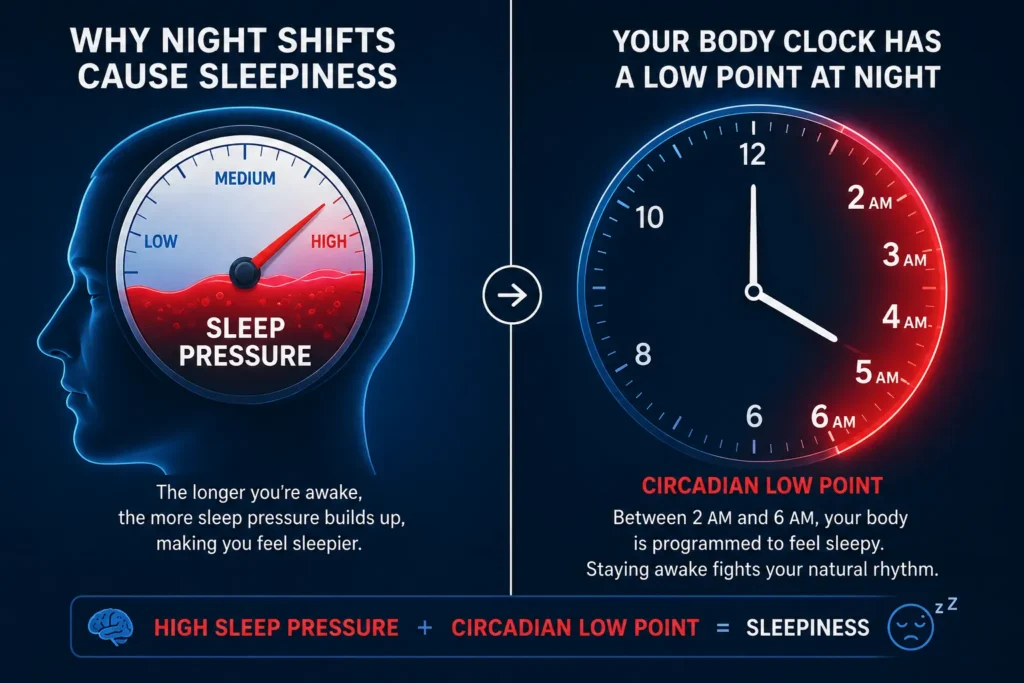
Feeling tired during an overnight shift happens for two main reasons: your circadian rhythm and sleep pressure.
Your circadian rhythm is your body’s roughly 24-hour internal clock. It is strongly influenced by light and darkness and helps regulate when you feel awake or sleepy. Even if you work nights, your internal clock doesn’t automatically shift to match your work schedule, which can make the early-morning hours particularly challenging for alertness.
At the same time, sleep pressure builds the longer you are awake. This is the physiological need for sleep that makes you feel progressively sleepier. You can learn more about this process by reading up on what sleep drive is. When you work all night, your sleep pressure becomes very high just as your circadian rhythm is sending its strongest sleep signals, creating a perfect storm for fatigue.
11 Ways to Stay Awake and Alert on Night Shift
Managing fatigue isn’t about finding a magic bullet. It’s about building a toolkit of practical strategies you can use before, during, and after your shift.
1. Start the Shift Well Rested
The single most effective way to manage fatigue is to show up with your energy tank full. This means protecting your daytime sleep and getting as much quality rest as possible before your first night shift. Trying to run on a few hours of poor sleep is a recipe for a long, difficult, and potentially unsafe night.
2. Use Bright Light Strategically
Light is one of the most powerful cues for your internal clock. Exposing yourself to bright light during your shift can help promote alertness. If your workspace is dim, use a desk lamp or take breaks in a brightly lit area. This reinforces the signal to your brain that it’s time to be awake, even if it’s dark outside.
3. Use Caffeine Strategically, Not Constantly
Caffeine can be an effective tool, but timing is everything. A cup of coffee or tea at the beginning of your shift can help you feel more alert. However, consuming caffeine throughout the night can interfere with your ability to sleep after your shift. A good rule of thumb is to avoid caffeine for at least 6-8 hours before you plan to go to bed.
4. Take a Short Nap When Your Schedule Allows
A planned nap can be a powerful way to reduce sleep pressure. A 20-30 minute nap before your shift can improve alertness for hours. If your workplace policy allows for it, a short nap during a break can also be very effective. For more on this, see our guide on the optimal shift nap times. Just be aware of sleep inertia,the grogginess you might feel immediately after waking up.
5. Move Instead of Sitting for Hours
Remaining sedentary for long periods can increase feelings of sleepiness. Get up and move around whenever you can. Even a few minutes of walking, stretching, or doing a few bodyweight squats during a break can increase blood flow and help you feel more awake and focused.

6. Eat in a Way That Supports Alertness
A huge, heavy meal can leave you feeling sluggish and ready for a nap. Instead, opt for smaller, more frequent meals and snacks throughout your shift. Focus on a balance of protein, healthy fats, and complex carbohydrates to provide sustained energy. Avoid sugary snacks and drinks that lead to a quick energy spike followed by a crash.
7. Stay Hydrated
Dehydration is a common and often overlooked cause of fatigue and brain fog. Make sure you’re drinking enough water throughout your shift. Keep a water bottle handy and sip on it regularly, rather than waiting until you feel thirsty.
8. Keep Your Work Environment Engaging When Possible
Monotony is a major contributor to sleepiness. If your job allows, try to vary your tasks. Switch between active and passive duties. If you work with others, a brief conversation during a break can help you feel more connected and alert.
9. Break Up Long Periods of Sitting
If your job is mostly sedentary, like monitoring screens or driving, it’s especially important to break up those long periods of sitting. Even just standing up for a few minutes every hour can make a difference. These small changes prevent your body from getting too comfortable and drifting toward sleep.
10. Avoid Alcohol and Sedating Substances
It can be tempting to use alcohol to help you fall asleep after a shift, but it ultimately disrupts sleep quality and leaves you less rested. Using alcohol or other sedatives to manage your sleep-wake cycle is not a sustainable or healthy fatigue management strategy.
11. Know When Fatigue Has Become a Safety Problem
This is the most important strategy of all. There’s a difference between feeling tired and being functionally impaired. If you experience any of the following, your fatigue has reached a dangerous level:
- Difficulty keeping your eyes open
- Repeatedly nodding off (microsleeps)
- Can’t stop yawning
- Trouble concentrating or remembering recent events
- Drifting out of your lane while driving
At this point, no amount of coffee will make you safe. Stop what you are doing and address the safety risk.
What to Do When You Feel Yourself Falling Asleep at Work
If you find yourself nodding off, you need to act immediately.
- Stop any safety-critical tasks. If you are driving, pull over in a safe place. If you are operating machinery, stop.
- Inform a supervisor or coworker. Let someone know you are struggling. Many workplaces have policies for managing fatigue.
- Take an approved break. Use this time to move, get some bright light, or have a caffeinated beverage.
- Use a strategic nap. If your workplace has a policy that allows napping, a short 20-minute nap can be the most effective way to restore alertness.
- Do not drive home if you are dangerously sleepy. Your commute is one of the most dangerous parts of your day. If you are too tired to drive safely, you need to find an alternative, like a taxi, rideshare, or calling a friend or family member.
How to Stay Awake on a 12-Hour Night Shift
A 12-hour shift requires a more structured approach to fatigue management.
- Before the shift: Prioritize getting a solid block of sleep (7-9 hours if possible). Have a balanced meal before you leave.
- First 4 hours: This is often the easiest part. Stay hydrated and focus on your tasks.
- Middle 4 hours: This is when fatigue often starts to build. Have a healthy snack, take a short walk on your break, and consider having your main dose of caffeine during this window.
- The 2-5 a.m. window: This is your circadian low point. If possible, schedule more engaging or active tasks during this time. Use bright light and stay extra vigilant.
- Final hours: The end is in sight, but don’t let your guard down. Avoid caffeine now so you can sleep after work. Focus on finishing your tasks safely.
- After the shift: Your post-shift routine is key. Check out our practical guide for shift workers to learn how to wind down effectively.
What About Energy Drinks?
Energy drinks can provide a temporary boost in alertness, but they are not a long-term solution. They typically contain high amounts of caffeine and sugar. While the caffeine can help, the sugar can lead to an energy crash later on.
If you choose to use them, do so sparingly. Be aware of the total caffeine content, especially if you also drink coffee or tea. Consuming multiple energy drinks can easily push your caffeine intake to excessive levels, which can disrupt your post-shift sleep and create a vicious cycle of fatigue.
Why “Pushing Through” Fatigue Can Backfire
Relying on willpower to overcome biological sleepiness is a losing battle. When you are sleep-deprived, your brain’s performance declines whether you feel it or not. Your reaction time slows, your judgment becomes impaired, and your risk of making a mistake increases significantly.
The most dangerous part of severe fatigue is the risk of microsleeps, brief, involuntary episodes of sleep that can last for a few seconds. If a microsleep happens while you are driving or operating machinery, the consequences can be catastrophic. Pushing through fatigue isn’t a sign of strength; it’s a safety gamble. If you often feel tired all the time, it’s a sign that your body needs more recovery.
How to Stay Awake Without Destroying Your Daytime Sleep
The key is balance. The same things that help you stay awake at night can prevent you from sleeping during the day if you aren’t careful.
- Caffeine Cutoff: Stop all caffeine at least 6-8 hours before you plan to sleep.
- Light Exposure: On your way home, wear sunglasses to minimize exposure to morning sunlight, which can trick your brain into thinking it’s time to wake up.
- Wind-Down Routine: Create a relaxing routine to signal to your body that it’s time to sleep. This could include a warm shower, reading a book, or listening to calm music.
- Create a Cave: Make your bedroom as dark, quiet, and cool as possible. Best blackout curtains for shift workers are a non-negotiable tool for quality daytime sleep.
Night Shift Fatigue: The Bigger Picture
While these personal strategies are important, it’s also true that fatigue is a systemic issue. Factors like staffing levels, break schedules, and the design of the work environment all play a role. Effective fatigue management is a shared responsibility between employees and employers. Your job is to manage your own fitness for duty, while your employer’s job is to create a schedule and environment that minimizes fatigue risks.
Frequently Asked Questions
Why am I so tired on night shift?
You feel tired because your body’s internal clock (circadian rhythm) is sending strong signals to sleep, and the longer you stay awake, the more “sleep pressure” builds up.
What is the best way to stay awake on night shift?
The best way is a combination of strategies: start the shift well-rested, use caffeine and bright light strategically early in the shift, stay active, and hydrate.
How do I stay awake on a 12-hour night shift?
Pace yourself. Use caffeine early, plan for the 2-5 a.m. fatigue window by scheduling more engaging tasks, take your breaks, and stay hydrated throughout the entire shift.
Does caffeine actually help with night shift fatigue?
Yes, caffeine is a proven alertness aid. However, it only provides a temporary boost and doesn’t eliminate your underlying need for sleep. Use it strategically, not constantly.
Is it okay to nap during a night shift?
If your workplace policy allows it, a short nap of 20-30 minutes can be very effective at reducing sleepiness and improving performance.
How can I stay awake without caffeine?
Focus on other strategies: use bright light, take frequent movement breaks, stay hydrated, eat light snacks, and engage in conversation with coworkers.
Why do I get sleepy around 3 a.m.?
This is typically when your body temperature is at its lowest and your circadian rhythm is sending the strongest signals for sleep, creating a natural dip in alertness.
Are energy drinks good for night shift?
They can provide a temporary boost due to their high caffeine content, but they often contain a lot of sugar that can lead to a crash. Use them cautiously and be aware of the total caffeine you’re consuming.
How do I avoid falling asleep while driving home after a night shift?
If you feel dangerously drowsy, do not drive. Take a nap before you leave work (if possible), or use a taxi or rideshare service. Your safety is more important than getting home quickly.
How much sleep should I get before a night shift?
Aim for 7-9 hours of sleep in the 24 hours before your shift, just as you would for a day shift. Protecting this sleep opportunity is the most important step in fatigue management.
The Bottom Line
Staying alert on a night shift is a skill that you can develop. It starts with prioritizing sleep and recovery before you even clock in. During your shift, use tools like light, strategic caffeine, and movement to manage your alertness levels. Most importantly, learn to recognize the signs of severe fatigue and treat it as the serious safety concern it is.
The goal isn’t to become someone who doesn’t need sleep. It’s to manage your energy and alertness responsibly so you can thrive on any shift and still get the quality recovery your body requires.