
Recovering from a night shift involves a strategic routine focused on managing light exposure, timing meals and hydration, creating a sleep-conducive environment, and getting a consolidated block of sleep as soon as possible after work. The best approach protects your sleep, refuels your body properly, and adjusts based on whether you have another night shift soon or are transitioning back to a daytime schedule.
The end of a night shift is a strange time. You’re exhausted but your brain feels wired. The sun is up, traffic is building, and the world is starting its day just as yours should be ending. Knowing how to recover from a night shift is less about a single secret and more about a simple, repeatable process that signals to your body it’s time to rest, repair, and recharge for whatever comes next.
Key Takeaways
- Control Light Exposure: Wear sunglasses on your commute home to block morning light, which can interfere with your body’s ability to produce melatonin and fall asleep [6].
- Prioritize Sleep: Prioritize a sufficient, consolidated sleep period after your shift, ideally allowing enough time to meet your individual sleep needs before your next major obligation. [4].
- Create a Cave: Make your bedroom as dark, cool, and quiet as possible. Blackout curtains, an eye mask, and white noise can significantly improve daytime sleep quality.
- Eat and Hydrate Smartly: Have a light meal or snack before bed to avoid waking up hungry, but avoid large, heavy meals that can disrupt sleep [4, 5]. Stop consuming caffeine at least 4-8 hours before the end of your shift [7].
- Plan Your Recovery: Your post-shift routine should change depending on your schedule. The strategy for working another night shift is different from the one for switching back to a day schedule.
- Listen to Your Body: Fatigue is a serious safety concern. If you consistently struggle with severe sleepiness or insomnia, it’s important to speak with a healthcare professional.
How to Recover From a Night Shift: The Best Post-Shift Routine
The best way to recover from a night shift is to follow a consistent wind-down routine that prioritizes sleep. This sequence helps manage the abrupt transition from a stimulating work environment to a restful state, setting you up for better quality sleep and a more effective recovery.
Here is a practical, step-by-step approach to use after your shift ends:
- Reduce Stimulation: As your shift winds down, start to mentally prepare for sleep. Avoid stressful conversations or tasks if possible.
- Get Home Safely: Fatigued driving is a real danger. If you feel too tired to drive, consider alternative transportation or a short, strategic nap before you leave work if your workplace allows it.
- Use Light Strategically: Wear dark sunglasses on the drive home. Blocking bright morning sunlight is one of the most important steps to protect your upcoming sleep [6].
- Have a Light Meal or Snack: If you’re hungry, eat a small, balanced meal. A large, heavy meal right before bed can interfere with your ability to sleep deeply [4].
- Hydrate: Drink a glass of water, but avoid chugging a large amount right before lying down, which could lead to bathroom trips that interrupt your sleep.
- Create Your Sleep Sanctuary: Go straight to your prepared bedroom. It should be completely dark, cool, and quiet.
- Sleep as Soon as Practical: Don’t delay your sleep by running errands or getting caught up in household chores. The longer you wait, the more sleep pressure you lose.
- Wake and Re-engage: After your main sleep, get some daylight exposure, rehydrate, eat a proper meal, and incorporate some light physical activity. This helps reset your body clock, especially on days off [8].
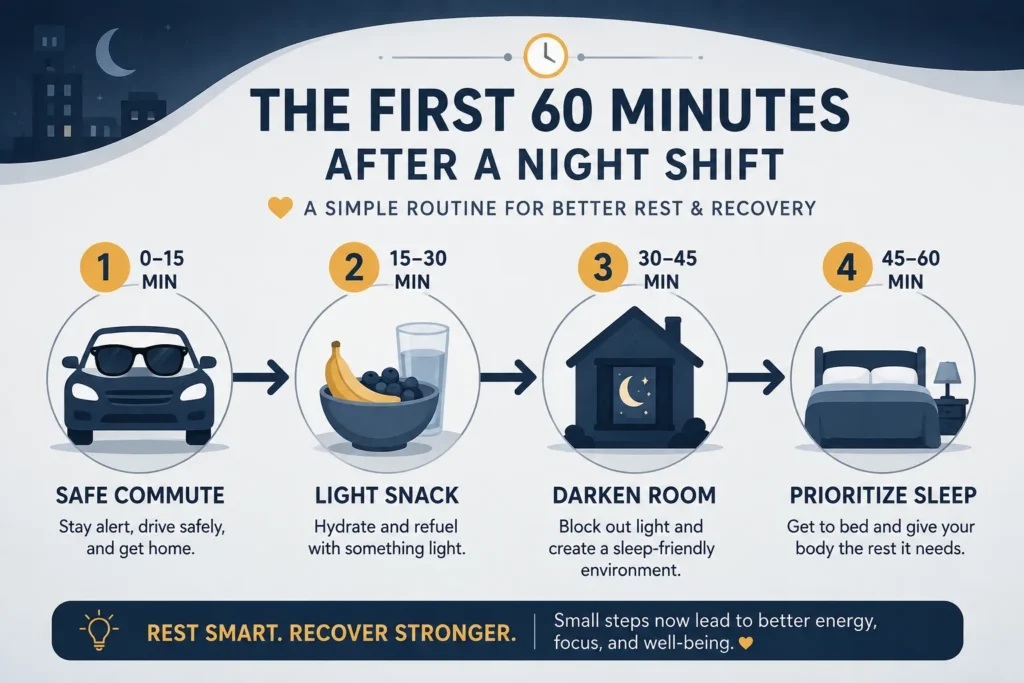
Your First 60 Minutes After a Night Shift
Knowing how to recover from a night shift starts with what you do during this first hour. The goal isn’t to pack more tasks into your morning; it’s to transition efficiently from work into recovery.
Your main goal is to transition from “work mode” to “sleep mode” as efficiently as possible.
- Commute Safely: This is your top priority. Fatigue significantly impairs driving ability. If you’re feeling drowsy, pull over. Nothing is more important than arriving home safely.
- Avoid Errands: The grocery store or the bank can wait. Going from a dark workplace into a brightly lit store filled with people is overstimulating and sends the wrong signals to your brain.
- Manage Morning Light: Put on your sunglasses before you even leave the building. This simple act tells your brain that despite the sunrise, your “day” is ending [6].
- Eat if Necessary: If you are genuinely hungry, have a light, easy-to-digest snack. Think of something like a small bowl of oatmeal, a piece of fruit with yogurt, or a slice of toast. Avoid sugary, greasy, or heavy foods [5].
- Limit Screen Time: Avoid scrolling through your phone or watching television. The blue light from screens can suppress melatonin production and make it harder to fall asleep.
- Prepare Your Bedroom: Your sleep environment should be ready before you get home. This means the room is already dark, the temperature is cool, and any potential noise sources are managed.
Should You Sleep Immediately After a Night Shift?
For most night shift workers, sleeping as soon as possible after getting home is the best strategy. Your body has been awake for a long time, and your need for sleep, known as sleep pressure, is at its peak. Delaying sleep can make it harder to fall asleep later and may shorten your total sleep time.
Going to bed right away helps you take advantage of maximum sleepiness and aligns your rest period with your body’s lowest circadian point. However, the ideal timing can depend on your specific schedule.
Clinical guidelines recommend a consolidated sleep block of at least 7 hours immediately following a night shift to maximize recovery [4]. If you are working multiple nights in a row, maintaining a consistent daytime sleep schedule helps your body adapt.
The main exception is when you are finishing your last night shift and need to switch back to a daytime schedule for your days off. In that case, a shorter morning sleep of about 2-4 hours can be more effective. This allows you to build up enough sleep pressure to fall asleep at a normal bedtime that evening, helping you transition your body clock faster [4].
How Much Sleep Do You Need After a Night Shift?
You need enough sleep to feel rested and function safely, which for most adults is 7-9 hours in a 24-hour period. After a night shift, the goal is to get as close to a full, consolidated sleep session as possible. Chronic sleep restriction is a major issue for many who work nights.
Working consecutive night shifts can lead to a cumulative sleep debt, with each shift resulting in shorter and lower-quality recovery sleep [2]. This is why protecting your sleep time is so important for long-term health and performance.
While a short nap during your shift can improve alertness, it doesn’t replace the need for a long recovery sleep period at home [1]. Think of your main daytime sleep as your “anchor” sleep. It’s the most important recovery tool you have. Repeatedly getting by on just a few hours of sleep is not a sustainable strategy and can lead to significant fatigue and burnout. For more guidance on sleeping after your shift, see our practical guide for shift workers.
What to Eat After a Night Shift
What you eat after a night shift can impact your sleep quality and overall recovery. The best approach is to have a light, balanced meal or snack that satisfies hunger without disrupting your sleep.
- Avoid Large Meals: Eating a heavy, greasy, or large meal within two hours of bedtime can cause indigestion and interfere with sleep architecture [4]. Your digestive system slows down during sleep, and asking it to process a big meal can lead to discomfort.
- Focus on Balance: A good post-shift snack includes a mix of complex carbohydrates and protein, which can promote sleepiness. Examples include a small bowl of whole-grain cereal with milk, Greek yogurt with berries, or a hard-boiled egg with a piece of fruit.
- Time Your Caffeine Correctly: This is one of the most common mistakes. Caffeine has a long half-life, meaning it stays in your system for hours. To protect your sleep, you should stop all caffeine intake 4 to 8 hours before you plan to go to bed [7].
- Stay Hydrated (But Smart): Drink water throughout and after your shift, but taper off your intake as you get closer to bedtime to avoid waking up to use the bathroom.
Should You Exercise After a Night Shift?
Exercise is incredibly beneficial for shift workers, but the timing and intensity matter. For most people, performing an intense workout immediately after a long, fatiguing night shift is not a good idea. Your body is primed for rest and recovery, not high-stress physical activity.
However, light to moderate movement can be helpful.
- Light Activity: A gentle walk, stretching, or yoga can help you wind down and may even improve sleep quality.
- Intense Workouts: Save your heavy lifting or high-intensity cardio sessions for after you’ve had a full recovery sleep. Many shift workers find it more effective to exercise before their shift starts, as it can boost alertness and energy.
- Listen to Your Body: On days when you are severely fatigued, it is safer to prioritize sleep over exercise. Pushing through exhaustion increases your risk of injury and provides little benefit.
- Use Days Off: Your days off are the perfect time for longer, more intense training sessions when your body is better rested.
Recent studies show that targeted recovery protocols, which can include properly timed physical activity, can successfully reduce fatigue and insomnia symptoms in night workers [3]. The key is to integrate exercise in a way that supports your recovery, not detracts from it. For more on this topic, explore our resources on fatigue management.
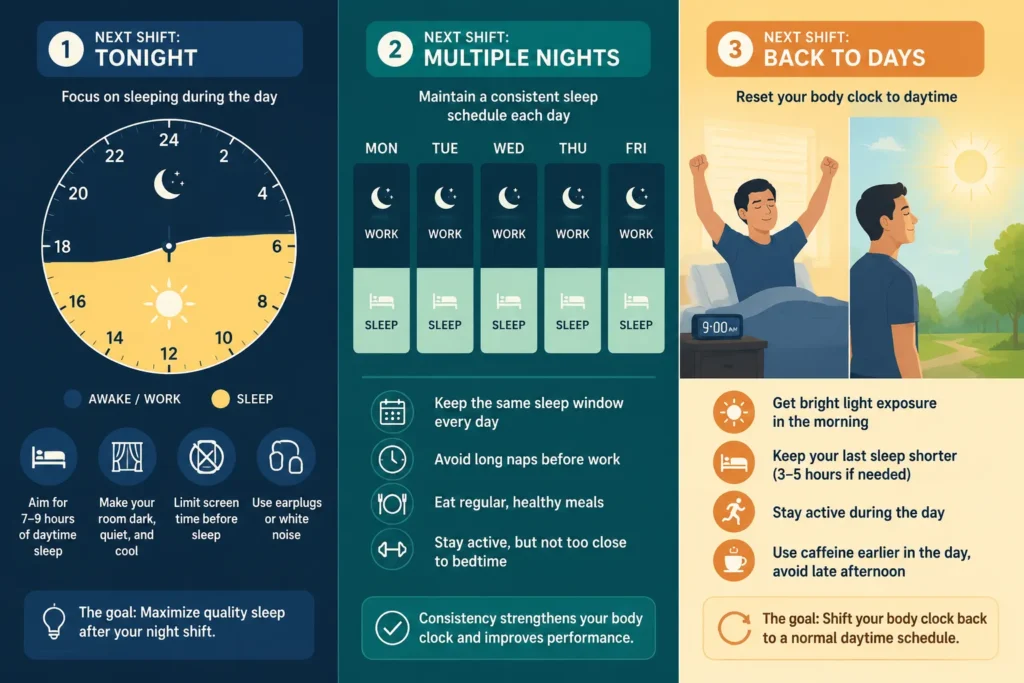
Your Recovery Routine Depends on Your Next Shift
A one-size-fits-all approach doesn’t work for shift work. The best recovery routine is one that adapts to your schedule. How you recover should be different if you’re going back to work tonight versus transitioning to your days off.
If You Work Another Night Shift Tonight
Your goal is to maximize sleep and be as rested as possible for your next shift.
- Priority: Get a long, consolidated block of sleep (aim for 7+ hours).
- Light Exposure: Strictly avoid morning light on the way home and keep your bedroom completely dark.
- Schedule: Go to bed as soon as you get home. Wake up in the afternoon with enough time to eat, prepare, and commute back to work.
If You Have Several Days of Night Shifts Ahead
Consistency is your friend. Try to maintain a stable sleep-wake schedule, even on your “weekend” between shifts.
- Priority: Maintain a consistent daytime sleep schedule to help your body clock adapt.
- Light Exposure: Continue to avoid morning light and seek out light in the evening before your shift to promote alertness.
- Schedule: Avoid flipping your schedule back and forth. Sticking to a night-oriented schedule for the duration of your work block reduces the constant jet lag feeling.
If Your Night Shifts Are Finished and You Need to Return to Days
Your goal is to shift your body clock back to a normal day/night rhythm as quickly as possible.
- Priority: Re-align your circadian rhythm to a daytime schedule.
- Light Exposure: This is where light becomes a powerful tool. After a short morning nap, get outside and expose yourself to bright, natural daylight [8].
- Schedule:
- Sleep for a shorter period (e.g., 2-4 hours) immediately after your last shift.
- Get up around noon, eat, and get some sun.
- Stay awake through the afternoon and evening.
- Go to bed at a normal nighttime hour (e.g., 10 or 11 PM). This helps you fall asleep easily because you’ve built up enough sleep pressure.
Common Night Shift Recovery Mistakes
Avoiding a few common pitfalls can make a huge difference in your recovery.
- Staying Awake Too Long: Running errands, doing chores, or watching TV for hours after your shift eats into your precious sleep window.
- Late-Shift Caffeine: A coffee or energy drink in the last few hours of your shift can wreck your recovery sleep [7].
- Eating a Huge Meal Before Bed: This can cause digestive upset and disrupt your sleep [4].
- Sleeping in a Bright or Noisy Room: Daytime sleep is lighter and more easily disturbed. A poor sleep environment is one of the biggest barriers to quality rest. You can improve your setup with some of the best blackout curtains for shift workers.
- Using Alcohol to Fall Asleep: While alcohol might make you feel drowsy initially, it fragments sleep in the second half of the night, leading to poor quality rest.
When Night Shift Fatigue Should Not Be Ignored
It’s normal to feel tired after working all night, but some levels of fatigue are not normal or safe. If you experience any of the following, it’s a good idea to speak with a doctor or a sleep specialist:
- Regularly falling asleep unintentionally (e.g., during a conversation or a meeting).
- Struggling to stay awake while driving, or having “microsleeps.”
- Persistent difficulty falling asleep or staying asleep (insomnia) despite having a good sleep environment.
- Severe sleepiness that interferes with your work performance or personal life.
- Loud snoring, gasping, or choking during sleep (signs of sleep apnea).
These could be signs of an underlying issue like Shift Work Sleep Disorder (SWSD) or another sleep disorder that requires professional medical advice. For more information, you can read about why night shift workers feel tired all the time.
Frequently Asked Questions
How long does it take to recover from a night shift?
Full recovery can take 24-48 hours, especially if you’ve accumulated a sleep debt. The immediate recovery focuses on getting a quality 7-9 hour sleep block, but resetting your circadian rhythm can take a couple of days.
What should I do immediately after a night shift?
Your top priorities are to commute home safely, avoid bright morning light by wearing sunglasses, have a light snack if you’re hungry, and get to bed in a dark, cool, quiet room as soon as possible.
Should I sleep right after a night shift?
Yes, for most people, sleeping immediately after a shift is the best way to take advantage of high sleep pressure and maximize sleep duration [4]. The exception is on your last day when you’re trying to switch back to a day schedule.
What should I eat after a night shift?
Eat a light, balanced meal or snack containing complex carbs and protein. Avoid heavy, greasy, or sugary foods that can disrupt sleep [5].
Should I exercise after working all night?
Intense exercise is best avoided right after a shift. However, light activity like walking or stretching can be beneficial. Save more strenuous workouts for after you’ve slept.
How do I recover from a 12-hour night shift?
Recovery from a 12-hour shift follows the same principles but is even more critical. Prioritize getting a 7-9 hour sleep opportunity, stay well-hydrated, and be extra vigilant about managing light exposure and fatigue while driving.
How can I sleep better during the day after a night shift?
Create an optimal sleep environment: use blackout curtains, wear an eye mask, block out noise with earplugs or a white noise machine, and keep your room cool.
Should I use caffeine after a night shift?
No. You should not use caffeine after a night shift if you plan to sleep. Stop all caffeine intake 4-8 hours before the end of your shift to ensure it doesn’t interfere with your recovery sleep [7].
How do I switch back to a normal schedule after night shifts?
On your last day, take a short nap (2-4 hours) in the morning. Then, get up and expose yourself to bright light. Stay awake for the rest of the day and go to bed at a normal time in the evening to reset your body clock [4, 8].
Conclusion
Knowing how to recover from a night shift isn’t about finding a magic fix. It’s about building a simple, consistent routine that respects your body’s need for rest. By strategically managing light, timing your meals, protecting your sleep time, and creating a cave-like sleep environment, you can dramatically improve your recovery.
The most important takeaway is to be intentional. Your post-shift routine is just as important as your pre-shift preparation. By prioritizing your recovery, you can reduce fatigue, improve your well-being, and continue to thrive while working outside the 9-to-5. For more practical sleep strategies, explore our other night shift sleep resources.