
Last updated: July 29, 2026
Sleep drive is the natural, biological pressure your body builds to fall asleep the longer you stay awake. This process, also known as homeostatic sleep pressure, works alongside your internal body clock (circadian rhythm) to regulate your sleep-wake cycle. For shift workers, understanding sleep drive is critical to managing alertness and getting restorative rest outside of a typical 9-to-5 schedule.
Key Takeaways
- What is Sleep Drive?: It’s the physical need for sleep that builds up every moment you are awake. Think of it like a growing hunger for sleep.
- Adenosine is Key: A chemical called adenosine accumulates in your brain while you’re awake, increasing sleep pressure. Sleeping clears this chemical away.
- Two-Process Model: Your sleep is governed by two systems: sleep drive (Process S) and your circadian rhythm (Process C), your 24-hour internal clock [1].
- Shift Worker Conflict: Shift workers often fight a battle between high sleep drive (from long hours) and a circadian rhythm that’s telling them to be awake during the day.
- The 2-5 AM Dip: The strongest natural urge to sleep occurs when high sleep pressure coincides with the lowest point of your circadian rhythm, typically between 2 AM and 5 AM.
- Caffeine’s Role: Caffeine works by temporarily blocking adenosine receptors in your brain, making you feel less sleepy without actually reducing your sleep drive.
- Naps Reduce Pressure: A short nap can help clear some adenosine, temporarily reducing your sleep pressure and improving alertness.
What Is Sleep Drive?
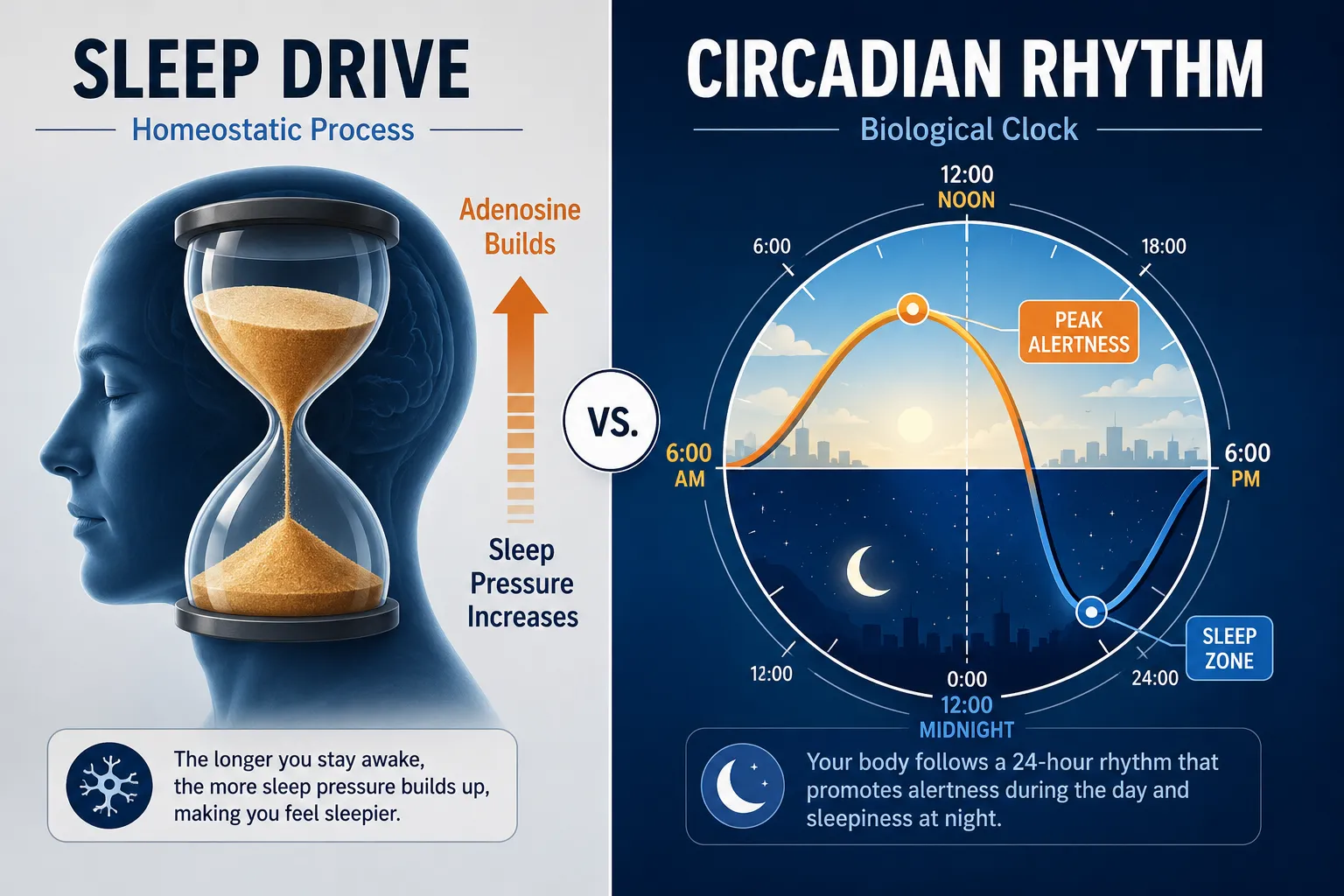
Sleep drive, or homeostatic sleep pressure, is your body’s way of tracking its need for sleep. It’s a simple concept: the longer you’ve been awake, the stronger your desire and need for sleep becomes. Imagine it like an hourglass. When you wake up, the hourglass is flipped, and “sleep pressure” begins to build like sand filling the bottom chamber.
This biological process is completely separate from your daily habits or your internal clock. It’s a fundamental need, just like hunger or thirst. After about 16 hours of being awake, your sleep drive is typically strong enough to make you feel very sleepy, signaling that it’s time to rest and reset. For those in demanding roles like nursing, trucking, or manufacturing, managing this pressure is essential for staying safe and effective on the job.
Sleep Drive vs. Circadian Rhythm
Your sleep-wake cycle is regulated by two main systems working together: sleep drive and your circadian rhythm. This is often called the two-process model of sleep regulation [1]. Understanding the difference is crucial for any shift worker.
- Sleep Drive (Process S): This is your homeostatic system. It’s a straightforward process, the longer you’re awake, the more you want to sleep. It doesn’t know or care what time it is.
- Circadian Rhythm (Process C): This is your internal body clock. It’s a 24-hour cycle controlled by a part of your brain called the suprachiasmatic nucleus (SCN). This clock tells you when to feel alert and when to feel sleepy based on light exposure and established routines.
For a person on a traditional schedule, these two systems work in harmony. Sleep drive builds all day, peaking in the evening just as the circadian rhythm starts promoting sleep.
However, for a night shift worker, these systems are in direct conflict. When you finish a night shift around 7 AM, your sleep drive is extremely high after being awake all night. But your circadian rhythm is screaming, “It’s morning! Time to be awake and alert!” This conflict is why getting quality daytime sleep can be so difficult. You’re exhausted, but your body clock is working against you.
What Causes Sleep Pressure?
The primary driver behind your sleep drive is a neurochemical called adenosine. Understanding its role helps explain why you feel sleepy and how things like caffeine and naps affect you.
The Role of Adenosine
From the moment you wake up, your brain cells are active, using energy. A byproduct of this energy consumption is adenosine. This chemical gradually builds up in your brain throughout the day.
Adenosine binds to specific receptors in the brain, which has the effect of slowing down brain activity and making you feel drowsy. The more adenosine that accumulates, the stronger the signal to sleep becomes.
When you finally sleep, your brain’s glymphatic system works to clear this adenosine away. A full night of restorative sleep effectively “resets” your brain, leaving you feeling refreshed and alert when you wake up. If you don’t get enough sleep, you start the next day with leftover adenosine, which is why you might feel groggy or “sleep drunk.”
Why Shift Workers Fight Their Sleep Drive
The very nature of shift work forces you to operate against your body’s natural rhythms. This creates a constant struggle with sleep drive and alertness.
Night Shifts
If you work the night shift, you are awake when your sleep drive and circadian rhythm are both telling you to sleep. You have to push through the body’s strongest signals for rest. Then, when your shift ends in the morning, your sleep drive is at its peak, but your body clock, triggered by daylight, is promoting wakefulness. This makes it challenging to fall asleep and stay asleep, leading to a chronic sleep debt.
Rotating Shifts
Workers on rotating schedules face an even tougher challenge. Your body clock never has a chance to fully adjust to one schedule before it changes again. This constant shifting creates a state similar to permanent jet lag. Your sleep drive might be high, but your circadian rhythm is out of sync, making consistent, quality sleep feel almost impossible.
Early Morning Shifts
Even starting a shift at 4 or 5 AM can be disruptive. It forces you to wake up when your circadian rhythm is still in a “sleep phase,” cutting your sleep short. This means you start your day with an incomplete clearing of adenosine, leading to higher sleep pressure and fatigue earlier in your shift.
Why You’re Sleepiest Between 2 AM and 5 AM
Nearly every shift worker, especially truck drivers and night security officers, is familiar with the intense wave of drowsiness that hits in the pre-dawn hours. This isn’t just because you’ve been up for a long time; it’s the result of a “perfect storm” in your sleep regulation system.
During this window, two things happen simultaneously:
- High Sleep Pressure: Your homeostatic sleep drive has been building for hours and is likely very strong.
- Circadian Trough: Your internal body clock reaches its lowest point of alertness promotion. This is often called the “window of circadian low” (WOCL).
When maximum sleep pressure meets minimum circadian alertness, the result is an overwhelming feeling of sleepiness. This is the time when the risk of accidents and errors is highest because your brain is biologically primed for sleep.
How Naps Affect Sleep Drive
Naps can be a powerful tool for shift workers when used correctly. A nap works by allowing your brain to clear away some of the accumulated adenosine, which temporarily reduces your overall sleep pressure.
Even a short 20-30 minute power nap can significantly improve alertness, cognitive function, and mood. It lowers your immediate sleep drive just enough to help you get through the remainder of your shift safely. For more details on timing, check out our guide on how long you should nap during a night shift.
However, be mindful of nap length. Napping for too long (over 90 minutes) can lead to “sleep inertia”, that groggy, disoriented feeling upon waking, because you might wake up from a deep stage of sleep.
Caffeine and Sleep Pressure
Many shift workers rely on caffeine to stay awake, but it’s important to understand how it actually works. Caffeine is an adenosine receptor antagonist.
In simple terms, caffeine molecules have a similar shape to adenosine. They fit into the same receptors in your brain, effectively blocking adenosine from binding. When adenosine can't bind to its receptors, its sleep-inducing signal is blocked, and you feel more alert.
However, caffeine doesn't get rid of the adenosine. The chemical continues to build up in the background. Once the caffeine wears off, all that accumulated adenosine rushes to the receptors, which can cause a sudden and intense feeling of exhaustion, often called a "caffeine crash."
How Light Affects Your Body Clock
Light is the most powerful signal for your circadian rhythm. Exposure to light, especially blue light from the sun and electronic screens, tells the SCN in your brain that it's daytime.
This signal triggers the suppression of melatonin, a hormone that promotes sleep. When you work at night under bright artificial lights, you are sending a confusing message to your brain. Then, when you drive home in the morning and are exposed to sunlight, your brain becomes convinced it's time to be awake, making it even harder to fall asleep.
This is why managing light exposure is one of the most effective strategies for shift workers. Wearing blue-light-blocking glasses during the last part of your shift and on your commute home can help prevent melatonin suppression and make it easier to fall asleep once you get to bed.
What Happens When Sleep Drive Is Disrupted?
Constantly fighting your sleep drive and living with a misaligned circadian rhythm isn't just tiring, it has serious consequences for your health, safety, and well-being.
Signs of excessive sleep pressure and disruption include:
- Microsleeps: Brief, involuntary episodes of sleep that can last for a few seconds. They are extremely dangerous if you are driving or operating machinery.
- Cognitive Impairment: Difficulty concentrating, poor memory, and slower reaction times.
- Mood Disturbances: Increased irritability, anxiety, and risk of depression.
- Increased Health Risks: Chronic sleep disruption is linked to a higher risk of cardiovascular disease, diabetes, obesity, and certain types of cancer.
Learning how to sleep better after a night shift is not a luxury; it's a critical part of protecting your long-term health.
How Aging Changes Sleep Drive
As we get older, our sleep patterns naturally change. These changes can make shift work even more challenging.
- Weaker Sleep Drive: Older adults may have a less robust homeostatic sleep drive. This means they might not feel as sleepy after a long period of wakefulness, but their need for sleep is still there.
- Shifting Circadian Rhythm: The internal clock often shifts earlier (a phase advance), making it harder to stay awake late at night and causing earlier morning awakenings.
- Lighter Sleep: Sleep becomes lighter and more fragmented, with less time spent in deep, restorative sleep stages.
For an older shift worker, this can mean that it's harder to tolerate night shifts and rotating schedules than it was when they were younger.
How to Improve Sleep Drive Naturally
While shift work will always be challenging, you can work with your sleep drive instead of against it. The goal is to maximize sleep quality when you have the chance and manage alertness when you need to be awake. You can find more tips in our night shift sleep category.
Keep a Consistent Sleep Schedule
Even on your days off, try to stick to your work schedule as much as possible. Avoid flipping back and forth between a day and night schedule. This helps your internal clock adjust. If you must switch, do it gradually.
Strategic Naps
Use short, planned naps before your shift or during a break to reduce sleep pressure. A 20-40 minute nap can restore alertness without making you feel groggy.
Smart Caffeine Timing
Use caffeine at the beginning of your shift to help you stay alert, but avoid it within 6-8 hours of your planned bedtime. This gives your body time to clear it so it doesn't interfere with your sleep.
Control Light Exposure
- At Work: Keep your workspace bright to promote alertness.
- Commuting Home: Wear dark, wrap-around sunglasses or blue-light-blocking glasses.
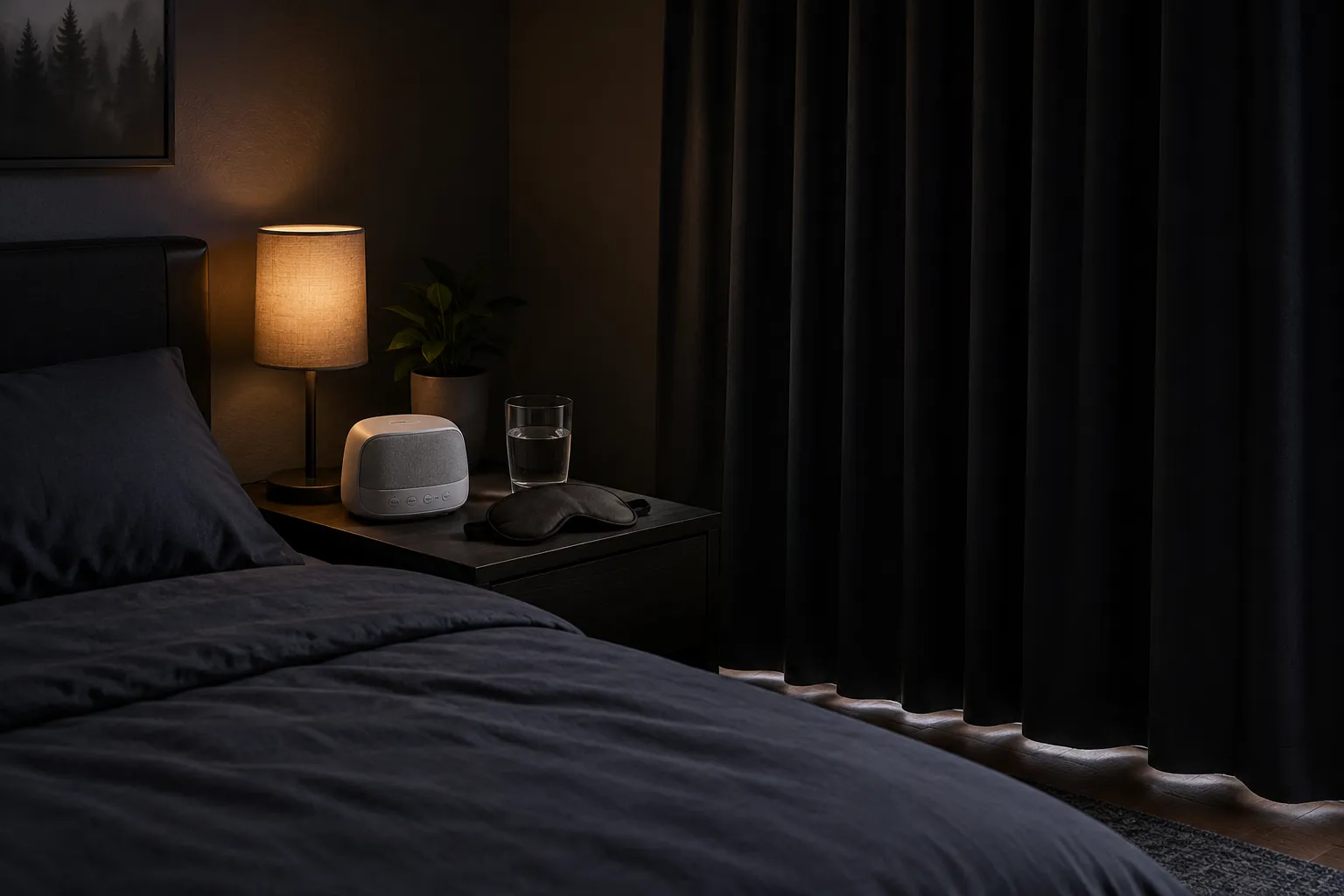
- At Home: Make your bedroom as dark as possible. Use blackout curtains, turn off all electronics, and wear an eye mask.
Create a Sleep-Friendly Environment
Your bedroom should be a sanctuary for sleep. Keep it dark, quiet, and cool. Use a white noise machine or earplugs to block out daytime noises that can disrupt your rest.
Frequently Asked Questions
What is sleep drive in simple terms?
Sleep drive is the feeling of sleepiness that gets stronger the longer you stay awake. Think of it as your body's growing "hunger" for sleep.
Is sleep drive the same as being tired?
Not exactly. "Tired" can refer to physical fatigue or mental exhaustion, while sleep drive is the specific biological pressure to fall asleep caused by the buildup of adenosine in the brain.
Can you have a high sleep drive but not be able to sleep?
Yes. This is a common problem for shift workers. You can be exhausted (high sleep drive) but unable to sleep because your internal body clock (circadian rhythm) is promoting wakefulness.
How do I reset my sleep drive?
The only way to truly reset your sleep drive is to get a sufficient amount of quality sleep, which allows your brain to clear away the adenosine that has built up.
Does exercise increase sleep drive?
Yes, physical activity can increase the buildup of adenosine, which strengthens your sleep drive and can lead to deeper, more restorative sleep. However, avoid intense exercise too close to your planned bedtime.
Why don't I feel sleepy after an all-nighter?
You might experience a "second wind" because your circadian rhythm starts promoting alertness again in the morning, temporarily overriding your extremely high sleep drive. This is a temporary effect, and the sleep pressure is still there.
Conclusion
Understanding what is sleep drive is the first step toward mastering your sleep as a shift worker. It’s not just about feeling tired; it’s a powerful biological force. By recognizing how sleep pressure (Process S) interacts with your internal body clock (Process C), you can make smarter decisions about light exposure, caffeine use, and napping [1].
Instead of fighting a constant battle against your body, you can learn to manage these two systems. By creating a dark sleep environment, timing your caffeine intake, and using strategic naps, you can improve your daytime rest and stay safer and more alert during your shift. Taking control of your sleep isn't just about feeling better, it's about protecting your long-term health and well-being. To learn more about the science of sleep, explore our resources on sleep science.