

Last updated: July 16, 2026
To sleep better after a night shift, you must prioritize creating a dark, quiet, and cool sleep environment to counteract daytime light and noise. This involves using blackout curtains, managing your exposure to morning light on the commute home, and establishing a consistent pre-sleep routine to signal to your body that it’s time to rest, even when the sun is up.
Key Takeaways
- Master Your Environment: Your bedroom must be a cave. Use blackout curtains, eye masks, and white noise machines to block out sleep-disrupting light and sound.
- Control Light Exposure: Wear sunglasses on your commute home to prevent morning sunlight from suppressing melatonin, the hormone that makes you sleepy.
- Time Your Caffeine: Stop all caffeine intake at least 6-8 hours before you plan to sleep. Your last cup should be before the halfway point of your shift.
- Follow a Routine: A consistent wind-down routine (e.g., a warm shower, light reading) helps signal to your brain that it’s time for sleep, overriding daytime cues.
- Eat Smart: Avoid heavy, spicy, or fatty meals before bed. A light, balanced snack is best to prevent indigestion from disrupting your sleep.
- Stay Consistent: As much as possible, stick to the same sleep and wake times, even on your days off, to keep your internal body clock stabilized.
- Strategic Napping: A short 20-30 minute nap before your shift can boost alertness, but avoid long naps that interfere with your main sleep period.
Finishing a night shift as the rest of the world is just beginning its day is one of the most challenging aspects of the job. You’re fighting against thousands of years of human evolution that has wired your brain to be awake during the day and asleep at night. This guide provides science-backed, practical strategies on how to sleep better after a night shift, designed specifically for healthcare professionals, first responders, and all shift workers dedicated to keeping our communities running 24/7.
Understanding and working with your body’s natural rhythms is the key to unlocking restorative daytime sleep. These energy strategies will help you protect your health, improve recovery, and feel more human.
What Happens to Your Body During Night Shift Work

Working overnight directly conflicts with your body’s internal clock, or circadian rhythm, which is naturally synchronized with the 24-hour cycle of light and dark. This misalignment confuses the fundamental processes that govern your sleep, energy levels, and overall health.
Circadian Rhythm Explained
Your circadian rhythm is an internal 24-hour clock that regulates your sleep-wake cycle, hormone release, body temperature, and other important bodily functions. It’s primarily controlled by a part of your brain called the suprachiasmatic nucleus (SCN), which responds to light signals from your eyes. When you work at night and try to sleep during the day, you’re asking your body to operate against its core programming. This is the central reason why daytime sleep often feels less refreshing.
How Melatonin and Cortisol Affect Sleep
Two key hormones are thrown off by night shift work:
- Melatonin: Known as the “hormone of darkness,” melatonin levels naturally rise in the evening to prepare you for sleep. Exposure to light, especially the bright morning sun on your way home, suppresses its production, making it incredibly difficult to fall asleep.
- Cortisol: This is your body’s primary stress and alertness hormone. Its levels are typically lowest at night and spike in the morning to help you wake up. For a night shift worker, this cortisol surge happens right when you’re trying to go to sleep, further disrupting your ability to rest.
Why Daytime Sleep is Often Shorter and Lighter
Because of the hormonal and environmental misalignment, daytime sleep is often lighter and more fragmented than nighttime sleep. Your body temperature is also naturally higher during the day, which is not conducive to deep, restorative sleep. As a result, many shift workers accumulate a significant “sleep debt,” leading to chronic fatigue, impaired judgment, and long-term health risks.
Why Many Night Shift Workers Struggle to Sleep
Several environmental and behavioral factors compound the biological challenge of sleeping during the day. Successfully learning how to sleep better after a night shift requires identifying and managing these common obstacles.
Light Exposure
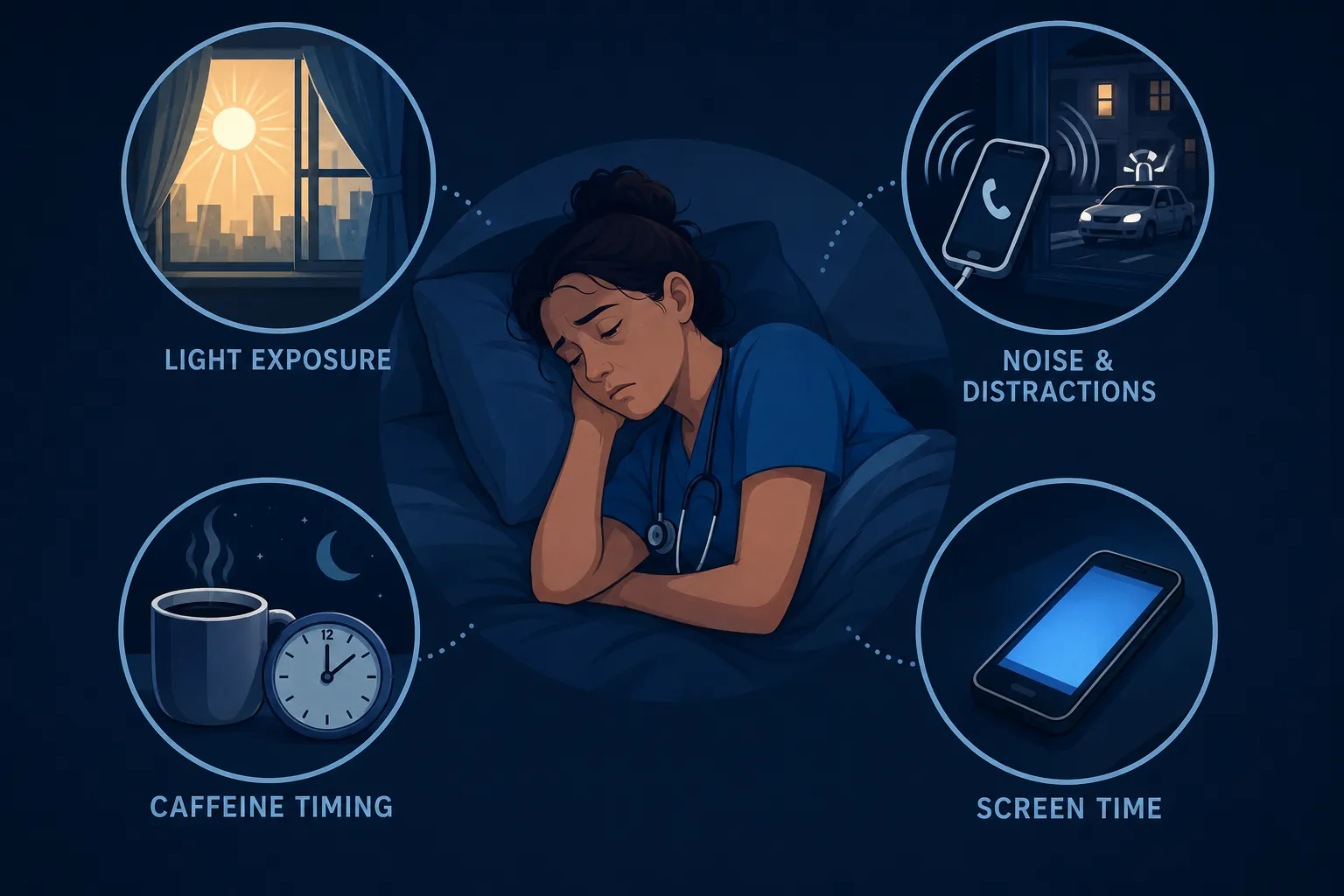
Light is the most powerful signal for your internal clock. Exposure to sunlight during your commute home tells your brain it’s time to be awake, effectively slamming the brakes on melatonin production. Even indoor lighting can be disruptive.
Noise and Household Distractions
The world is active during the day. Doorbells, lawnmowers, traffic, and family members create a noisy environment that can easily interrupt your lighter daytime sleep.
Stress and Mental Overstimulation
Many night shift jobs, especially in healthcare and for first responders, are high-stress. It can be difficult to “turn off” your brain after a demanding shift, making it hard to relax enough to fall asleep.
Caffeine Timing
A cup of coffee can be essential for staying alert, but consuming caffeine too close to your bedtime will sabotage your sleep. Its stimulating effects can last for many hours, preventing you from falling asleep and reducing sleep quality.
Poor Sleep Environment
A bedroom that isn’t optimized for daytime sleep, one that is too bright, too warm, or not quiet enough, makes quality rest nearly impossible. Your sleep environment is one of the most critical factors you can control. For more insights into sleep data, check out our sleep data and statistics.
Inconsistent Work Schedules
Rotating shifts or irregular schedules prevent your body from ever fully adjusting to a new sleep-wake cycle. This constant state of flux is a major contributor to shift work sleep disorder.
The Ideal Sleep Routine After a Night Shift
A structured post-shift routine can train your body to recognize it’s time to sleep, even when external cues suggest otherwise. Consistency is your most powerful tool.
Step 1: Prepare Before Leaving Work
In the last hour of your shift, avoid bright screens and stressful conversations. Tidy up your workspace to create a sense of closure, helping your mind transition away from work mode.
Step 2: Protect Yourself from Morning Sunlight
This is non-negotiable. Wear dark, wrap-around sunglasses for your entire commute home, even on cloudy days. This simple act minimizes the light signals reaching your brain, preserving your melatonin levels.
Step 3: Eat a Light Meal If Needed
A heavy meal can disrupt sleep through indigestion. If you’re hungry, opt for a small, balanced snack containing both complex carbohydrates and protein, like a small bowl of oatmeal or a piece of whole-wheat toast with almond butter. Avoid sugary or greasy foods.
Step 4: Create the Perfect Sleep Environment
Your bedroom should be your sanctuary for sleep. The goal is to make it as dark, quiet, and cool as possible. This is the cornerstone of mastering daytime sleep.
Step 5: Keep Your Bedroom Cool, Dark, and Quiet
- Dark: Use high-quality blackout curtains or blinds. Cover or remove any electronics with LED lights. An eye mask can cover any remaining light gaps.
- Quiet: A white noise machine can mask disruptive daytime sounds. Earplugs are also a great, low-cost option.
- Cool: The ideal temperature for sleep is between 60-67°F (15-19°C). A cooler room helps facilitate the natural drop in body temperature needed for sleep.
Step 6: Limit Screen Time Before Sleep
The blue light emitted from phones, tablets, and TVs is particularly disruptive to melatonin production. Put all screens away at least 30-60 minutes before you plan to sleep. Consider reading a physical book or listening to a calming podcast instead.
Step 7: Maintain a Consistent Sleep Schedule
Try to go to bed and wake up around the same time every day, including your days off. This consistency helps anchor your circadian rhythm, making it easier to fall asleep and wake up feeling rested.
What Helps vs. What Hurts Sleep After a Night Shift
To help you optimize your routine, here is a clear comparison of habits that either support or sabotage your daytime sleep.
What Helps vs. What Hurts Sleep After a Night Shift
| Sleep Habit | Why It Helps (or Hurts) | Effect on Sleep Quality | Best Recommendation |
|---|---|---|---|
| Blackout Curtains | Blocks sunlight, which suppresses melatonin production. | Improves | Use 100% blackout curtains to make your room pitch dark. |
| Phone Use Before Bed | Blue light from screens tricks your brain into thinking it’s daytime. | Hurts | Stop using all screens 30-60 minutes before bed. |
| Caffeine Before Sleep | A stimulant that blocks sleep-inducing chemicals in the brain. | Hurts | Avoid caffeine for at least 6-8 hours before your planned sleep time. |
| Morning Sunlight Exposure | Strongest signal to your internal clock to be awake. | Hurts | Wear dark, wrap-around sunglasses on your commute home. |
| Cool Bedroom (60-67°F) | A lower body temperature is a key trigger for sleep initiation. | Improves | Set your thermostat or use a fan to keep your bedroom cool. |
| Heavy Meal Before Bed | Can cause indigestion, heartburn, and blood sugar spikes. | Hurts | Eat a light snack if hungry; avoid large meals 2-3 hours before sleep. |
| Alcohol | Initially sedating, but severely disrupts sleep in the second half of the night. | Hurts | Avoid alcohol as a sleep aid. It fragments sleep and reduces quality. |
| Consistent Sleep Schedule | Anchors your circadian rhythm, making it easier to fall asleep. | Improves | Go to bed and wake up at the same times daily, even on off days. |
Healthy Habits That Improve Sleep Quality
Your lifestyle choices outside of the bedroom play a huge role in your ability to get restorative sleep. Integrating these healthy habits can significantly improve your recovery strategies.
Exercise Timing
Regular physical activity is excellent for sleep, but timing is key. A moderate workout after you wake up can boost alertness and help regulate your body clock. Avoid intense exercise within 2-3 hours of your bedtime, as it can raise your core body temperature and heart rate, making it harder to fall asleep.
Nutrition
Focus on a balanced diet rich in whole foods. Some foods contain nutrients that support sleep, such as magnesium (found in nuts and leafy greens) and tryptophan (found in poultry and oats). Avoid processed foods, excess sugar, and large meals close to bedtime.
Hydration
Stay hydrated throughout your shift, but try to taper your fluid intake in the 1-2 hours before bed to prevent your sleep from being interrupted by trips to the bathroom.
Managing Stress
Chronic stress keeps your body in a state of high alert. Find a stress-management technique that works for you. Many first responders and healthcare professionals find that creating a clear boundary between work and home life is a crucial first step. If you need support, don’t hesitate to contact us for more resources.
Relaxation Techniques
Incorporate a 15-20 minute relaxation period into your pre-sleep routine. This can include:
- Deep Breathing: Inhale slowly for four counts, hold for seven, and exhale for eight. Repeat several times.
- Progressive Muscle Relaxation: Tense and then release different muscle groups throughout your body.
- Journaling: Write down any worries or thoughts to get them out of your head.
Should Night Shift Workers Take Melatonin?
Melatonin supplements are often considered a quick fix, but their effectiveness for shift workers is complex.
When It May Help
For some, a low-dose melatonin supplement (0.5mg to 3mg) taken about 30 minutes before desired sleep time can help adjust the body clock. It is most effective when used strategically to help initiate sleep when your body is not naturally producing melatonin.
How to Use It Safely
Always start with the lowest possible dose and consult a healthcare professional before beginning any new supplement. Do not use it as a long-term solution without medical guidance. It is not a traditional sleeping pill and won’t force you to sleep if your environment and habits are working against you.
When to Speak with a Healthcare Professional
If you are consistently struggling with sleep, it’s important to talk to your doctor. They can help you determine the right strategy and rule out underlying medical conditions.
Napping Strategies That Actually Work
Naps can be a powerful tool for managing fatigue, but they must be managed carefully to avoid disrupting your main sleep period. Research on medical residents found that “sleep banking”, extending sleep before and during a block of night shifts, can significantly improve performance and reduce fatigue [1].
Power Naps
A short nap of 20-30 minutes can improve alertness, performance, and mood without causing sleep inertia (grogginess). This is ideal for a break during your shift if permitted.
Pre-Shift Naps
A longer nap of about 90 minutes before your shift starts can be very effective. This allows you to complete a full sleep cycle and can help you feel more refreshed and alert for the hours ahead.
Avoiding Long Naps Before Work
Avoid napping for more than 90 minutes or napping too close to your main sleep period. Doing so can make it much harder to fall asleep when you get home from work.
When Poor Sleep Could Be a Medical Condition
If you’ve implemented these strategies and still find yourself struggling with excessive sleepiness or an inability to sleep, you may have an underlying sleep disorder.
Shift Work Sleep Disorder (SWSD)
This is a circadian rhythm sleep disorder characterized by insomnia and excessive sleepiness that directly results from a work schedule that overlaps with the typical sleep period.
Sleep Apnea
This condition involves repeated pauses in breathing during sleep, which leads to fragmented, poor-quality rest. Loud snoring, gasping for air, and daytime sleepiness are common symptoms.
Insomnia
Insomnia is the persistent difficulty with falling asleep, staying asleep, or getting good quality sleep, despite having the opportunity to do so.
Restless Legs Syndrome (RLS)
RLS is a condition that causes an uncontrollable urge to move your legs, typically in the evening or at night.
If you experience symptoms of any of these conditions, it is crucial to seek a medical evaluation from your doctor or a sleep specialist.
Frequently Asked Questions
How many hours should a night shift worker sleep?
Night shift workers need the same amount of sleep as day workers: 7-9 hours per 24-hour period. Because daytime sleep is often lower quality, it’s crucial to create an optimal environment to get as close to this goal as possible.
Is it better to sleep immediately after work?
For most people, yes. It’s generally best to sleep as soon as you get home to reduce your sleep debt. Delaying sleep can make it harder to fall asleep later as your body’s natural drive for wakefulness increases throughout the day.
Should I split my sleep into two sessions?
Some shift workers find a biphasic sleep pattern helpful. This involves sleeping for a main block of 4-6 hours after their shift and then taking a 2-3 hour nap later in the day before work. Experiment to see what works best for your body and schedule.
Can melatonin help after night shifts?
It can help some individuals initiate sleep, but it’s not a magic bullet. It should be used in low doses and in combination with good sleep hygiene practices. Always consult a doctor first.
How can I sleep longer during the day?
The key is a pitch-black, silent, and cool room. Use blackout curtains, a white noise machine, and an eye mask. Also, ensure you follow a consistent pre-sleep routine to signal to your brain it’s time to rest.
Practical Daily Sleep Checklist for Night Shift Workers
Use this checklist to build a consistent and effective post-shift routine:
- [ ] During Shift: Stop caffeine intake 6-8 hours before your shift ends.
- [ ] Commute Home: Wear dark, wrap-around sunglasses.
- [ ] On Arrival: Have a light, healthy snack if needed. Avoid a heavy meal.
- [ ] Wind-Down: Put away all electronic devices (phone, tablet, TV) 30-60 minutes before bed.
- [ ] Pre-Sleep Routine: Engage in a relaxing activity like reading, gentle stretching, or a warm shower.
- [ ] Bedroom Environment: Ensure the room is completely dark, cool (60-67°F), and quiet.
- [ ] Sleep: Get into bed and aim for 7-9 hours of protected, uninterrupted sleep.
Conclusion
Learning how to sleep better after a night shift is not a luxury, it’s essential for your physical health, mental well-being, and safety. By understanding the science of your circadian rhythm and implementing these practical, science-backed strategies, you can take control of your daytime sleep.
Start today by focusing on one or two key areas, like perfecting your sleep environment or creating a non-negotiable wind-down routine. Be patient and consistent. Your body can adapt, and with the right recovery strategies, you can thrive both on and off the clock. For more information on our mission to help shift workers, learn more about ShiftNap.