


Last updated: July 16, 2026
To sleep better after a night shift, you must prioritize creating a dark, quiet, and cool sleep environment to counteract daylight and noise. Establishing a consistent post-shift routine, managing light exposure, and avoiding stimulants like caffeine late in your shift are critical steps. This approach helps regulate your body’s internal clock, even when working against its natural rhythm.
Key Takeaways
- Control Your Environment: Use blackout curtains, a sleep mask, and a white noise machine to create an ideal sleep sanctuary that mimics nighttime.
- Establish a Routine: Go to bed and wake up around the same time every day, even on your days off, to help stabilize your body clock.
- Manage Light Exposure: Wear blue-light-blocking glasses on your commute home to prevent daylight from signaling your brain to wake up.
- Watch What You Eat and Drink: Avoid caffeine and alcohol in the hours before you plan to sleep. Opt for a light, healthy snack if you’re hungry.
- Create a Wind-Down Ritual: Spend 30-60 minutes relaxing before bed without screens. Try reading, a warm bath, or gentle stretching to signal to your body that it’s time for rest.
- Consider Your Schedule: Decide between sleeping immediately after your shift or a split-sleep schedule and stick with what works best for your body.
- Recognize Warning Signs: Persistent fatigue or an inability to sleep could be signs of Shift Work Sleep Disorder (SWSD). Know when to consult a healthcare professional.
Why Sleeping After a Night Shift Is So Difficult
Sleeping after a night shift is challenging because it forces your body to operate against its natural 24-hour internal clock, known as the circadian rhythm. This internal clock is powerfully influenced by light, which tells your brain when to be awake and when to sleep. When you try to sleep during the day, you’re fighting millions of years of evolution.
- Circadian Rhythm Disruption: Your body is naturally programmed to be awake during the day and asleep at night. Working overnight directly conflicts with this rhythm, confusing the hormones that regulate sleep and wakefulness, like melatonin (the sleep hormone) and cortisol (the stress hormone).
- Exposure to Daylight: Morning sunlight is the strongest signal to your brain to be alert. When you commute home after a night shift, that sun exposure suppresses melatonin production, making it significantly harder to fall asleep and stay asleep.
- Environmental Factors: Daytime is inherently noisier and brighter than night. Traffic, deliveries, family activities, and sunlight can easily disrupt the quality and length of your sleep.
- Social and Family Life: Trying to balance a night shift schedule with a world that operates from 9-to-5 creates social jetlag, making it difficult to participate in family events and maintain relationships without sacrificing precious sleep.
The health consequences of this disruption are significant. Research presented at the SLEEP 2026 Annual Meeting found that workers with Shift Work Sleep Disorder have a two to three times higher risk of major cardiovascular events compared to day workers [1].
How to Make Your Bedroom Better for Daytime Sleep
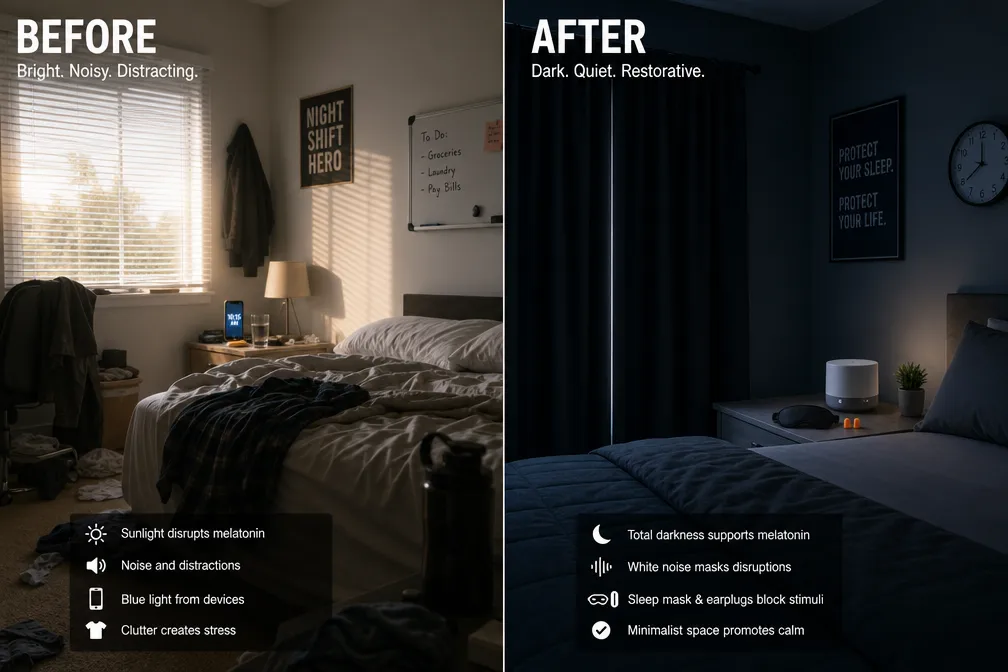
Your bedroom environment is your most powerful tool for securing quality sleep after a night shift. The goal is to trick your brain into thinking it’s nighttime. This requires a strict focus on controlling light, sound, and temperature to create a cave-like sanctuary.
- Blackout Everything: Invest in high-quality blackout curtains or blinds that block 100% of outside light. For any remaining light leaks around the edges, you can use weather stripping or tape. The darker the room, the better your brain can produce the melatonin needed for deep sleep.
- Keep It Cool: Your body temperature naturally drops to initiate sleep. The ideal bedroom temperature is between 60-67°F (15-19°C). Use air conditioning, a fan, or cooling bedding to maintain a cool, comfortable temperature.
- Silence the Noise: Daytime comes with sounds that can easily pull you from sleep. A white noise machine is one of the best investments a shift worker can make. It creates a consistent, soothing sound that masks disruptive noises like traffic, lawnmowers, or conversations. Earplugs are another effective and low-cost option.
- Banish Electronics: Remove or cover all sources of artificial light in your bedroom. This includes digital clocks, charging indicators, and television standby lights. Even a small amount of light can disrupt your sleep cycle. Consider charging your devices in another room.
A good sleep mask can supplement your blackout curtains, providing an extra layer of darkness, especially when traveling or if you can’t fully darken your room.
Create a Post-Night Shift Sleep Routine That Works
A consistent post-shift routine is essential for signaling to your body that the “day” is over and it’s time to rest. This ritual helps you transition from a state of high alert at work to a calm state ready for sleep. Rushing from your shift straight into bed rarely works because your mind and body are still activated.
- Start Winding Down Before You Get Home: Your wind-down should begin on your commute. Avoid listening to high-energy music or engaging in stressful phone calls. Wear blue-light-blocking glasses on the drive home to minimize your exposure to morning sunlight, which can halt melatonin production.
- Keep a Consistent Sleep Window: This is one of the most critical habits for a shift worker. Try to go to bed and wake up at the same time every day, even on your days off. This consistency, known as “anchoring sleep,” helps stabilize your circadian rhythm. For a deeper dive into sleep science, see our resources on the science of sleep.
- Avoid Stimulating Activities: The hour before you plan to sleep should be screen-free. The blue light from phones, tablets, and TVs is particularly disruptive to your sleep cycle. Instead, opt for relaxing activities like reading a physical book under dim, warm light, listening to a calming podcast, taking a warm shower, or practicing meditation.
- Communicate With Your Household: Make sure your family or roommates understand your sleep schedule. A “do not disturb” sign on your bedroom door can help prevent accidental awakenings from visitors or deliveries.
The Best Sleep Schedule for Night Shift Workers
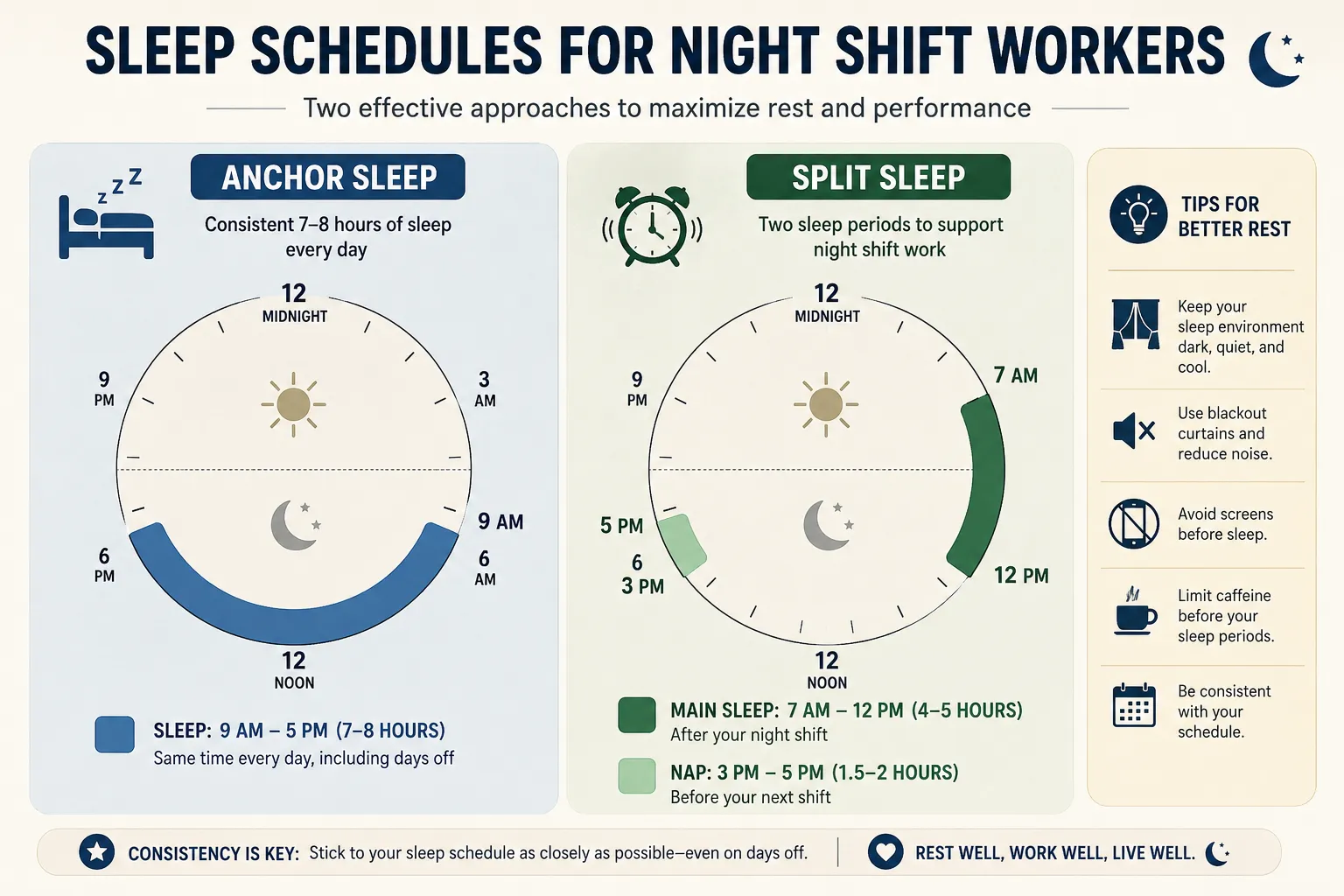
There is no single “best” sleep schedule for every night shift worker; the optimal strategy depends on your personal chronotype, lifestyle, and work demands. However, most successful schedules fall into one of two categories: the consolidated block or the split schedule. The key is consistency.
The two most common strategies are:
- The Anchor/Block Schedule: This involves sleeping in one continuous 7-8 hour block immediately after your shift. For example, if your shift ends at 7 AM, you would aim to be asleep by 8 AM and wake up around 4 PM. This method is often preferred because it consolidates sleep, allowing you to cycle through all the necessary sleep stages without interruption.
- The Split Sleep Schedule: This strategy breaks your total sleep time into two pieces. For instance, you might take a longer “nap” of 4-5 hours right after your shift, then wake up for a few hours to handle errands or spend time with family. Later, you would take another 2-3 hour nap before heading back to work. While less ideal than a single block, this can be more practical for workers with family commitments.
Common Mistake: Many shift workers try to flip back to a “normal” day-walker schedule on their days off. This constant switching is like inducing jet lag every week and makes it much harder for your body to adapt. It’s better to maintain your night-oriented schedule as much as possible, perhaps by shifting it by only a few hours.
For more on optimizing shorter rest periods, check out our guide on how long you should nap during a night shift.
What to Eat and Drink After a Night Shift for Better Sleep
What you consume at the end of your shift has a direct impact on your ability to fall asleep and stay asleep. The goal is to refuel your body without overstimulating your digestive system or your brain.
- Avoid Heavy Meals: A large, heavy meal right before bed can cause indigestion and discomfort, making it difficult to sleep. Instead, have a light, balanced snack that includes a mix of complex carbohydrates and protein, like a small bowl of oatmeal with nuts or a piece of whole-wheat toast with avocado.
- Stay Hydrated, But Wisely: Drink plenty of water throughout your shift, but try to taper off your fluid intake in the last hour or two before you plan to sleep. This reduces the chances of waking up needing to use the bathroom.
- Cut Off Caffeine Early: This is a non-negotiable rule. Caffeine has a long half-life, meaning it can stay in your system for many hours. To be safe, avoid all caffeine (including coffee, tea, soda, and energy drinks) for at least 6-8 hours before your planned bedtime.
- Limit or Avoid Alcohol: While alcohol may make you feel drowsy initially, it severely disrupts your sleep architecture later in the night. It suppresses REM sleep, which is crucial for mental restoration, and often leads to waking up after only a few hours.
Some research suggests that certain supplements may aid shift workers. A 2026 clinical trial found that melatonin supplementation helped night shift workers repair DNA damage associated with their schedules [2]. However, always consult a healthcare professional before starting any new supplement.
How Truck Drivers and Other Shift Workers Can Improve Sleep
While the core principles of sleep hygiene apply to everyone, certain professions face unique challenges that require tailored strategies.
- For Truck Drivers: Finding a safe, dark, and quiet place to sleep is the biggest hurdle. Invest in custom-fit blackout curtains for your cab. A high-quality mattress or mattress topper is essential for comfort on the road. Use a reliable white noise app or machine to block out noise from truck stops and highways.
- For Healthcare Workers (Nurses, Doctors): The high-stress nature of the job can make it difficult to wind down. Your post-shift routine is absolutely critical. Dedicate time to de-stress with activities like journaling, meditation, or a warm bath. Avoid discussing stressful work events right before bed.
- For First Responders (Police, Firefighters, EMTs): Unpredictable schedules and the potential for traumatic calls can lead to hypervigilance and difficulty relaxing. Prioritizing mental health through peer support or professional counseling is key. When you are off, protect your sleep time fiercely.
- For Factory and Security Workers: Shifts can be long and monotonous, but often require high levels of alertness. Ensure you are taking your scheduled breaks to move around and stay engaged. When your shift ends, switch off “work mode” by changing clothes and engaging in your wind-down routine immediately.
Common Mistakes That Make Night Shift Sleep Worse
Even with the best intentions, it’s easy to fall into habits that sabotage your sleep. Being aware of these common mistakes is the first step to avoiding them.
- Too Much Caffeine Too Late: Using caffeine to power through the end of a shift is a common trap. While it helps you stay awake at work, it will still be in your system when you try to sleep. Set a strict caffeine cut-off time at least 6 hours before your shift ends.
- Excessive Screen Time Before Bed: Scrolling through your phone in bed is one of the worst things you can do for sleep. The blue light tells your brain it’s time to be awake, and the content can be mentally stimulating. Put your phone away at least an hour before you plan to sleep.
- Inconsistent Sleep Schedules: As mentioned, flipping your schedule on days off is a recipe for chronic fatigue. While it’s tempting to join in on daytime activities, it wreaks havoc on your body clock. Try to stick to your night-shift schedule as closely as possible.
- Ignoring Your Body’s Signals: Don’t try to “power through” exhaustion. If you feel drowsy, listen to your body. Forcing yourself to stay awake when you’re tired or trying to sleep when you’re wide awake is counterproductive.
When Poor Sleep After Night Shifts May Be a Problem
While feeling tired is normal for a night shift worker, persistent and severe sleep problems are not. If you consistently struggle with sleep despite implementing these strategies, you may have a condition called Shift Work Sleep Disorder (SWSD).
Signs of SWSD include:
- Excessive sleepiness during your shift or when you need to be awake.
- Insomnia or an inability to get enough sleep during your off-hours.
- Unrefreshing sleep.
- Difficulty concentrating.
- Headaches or lack of energy.
If these symptoms persist, it’s crucial to speak with a doctor or a sleep specialist. Chronic sleep deprivation is linked to serious health issues, including heart disease, diabetes, and depression [1]. Ongoing clinical trials are exploring new treatments, such as medications like Solriamfetol and therapies that combine technology like Apple Watches with cognitive behavioral therapy (CBT) to help manage alertness and sleep [3].
Conclusion: Take Control of Your Post-Shift Recovery
Learning how to sleep after a night shift is not a luxury; it’s a fundamental component of your health, safety, and well-being. By understanding the challenges your body faces and implementing a consistent, strategic approach, you can significantly improve the quality of your daytime rest.
Start by transforming your bedroom into a dark, cool, and quiet sleep sanctuary. Develop a non-negotiable wind-down routine that signals to your body it’s time for rest. Be mindful of your diet, caffeine intake, and schedule, and don’t be afraid to seek professional help if you’re struggling. It takes time and effort, but mastering the art of daytime sleep is the key to thriving as a night shift worker.
Your Post-Shift Sleep Checklist
Use this interactive checklist to see how well your current routine sets you up for successful daytime sleep.